
Actuator Connector Factory
Scale your production with a dedicated actuator connector factory. Evaluate contract manufacturing feasibility, production routing, and quality control strategies for high-volume clevises, rod ends, and couplings before committing to an RFQ.
Why Factory-Level Control Matters
Prototyping a connector is easy; producing recurring lots without silent drift is harder. The factory route combines rigid CNC setups, inspection cadence, and supply-chain evidence so connector risks are visible before production release.
Factory-level process control prevents tolerance drift.
In production machining, tool wear can cause thread classes or pin fits to drift out of spec. A factory plan should define the gauging interval, CMM checks, and Cp/Cpk targets for customer-designated critical features.
Consolidated supply chain reduces lead times.
A production-focused actuator connector factory does more than mill and turn. Coordinating material sourcing, heat treatment, and plating can remove handoff delays, but the final schedule still depends on processor capacity and certificate review.
Dedicated fixtures lower per-part costs.
For contract manufacturing volumes, dedicated tombstone, soft-jaw, or palletized fixtures can reduce repeated setup variation and inspection escapes compared with one-off prototype workholding.
Quality documentation is built into the workflow.
Medical, aerospace, and safety-critical actuator assemblies often require traceability. The factory workflow must specify which documents travel with each lot before production begins.
Factory Validation & Limits
Production Capability Matrix
These factory routing bands show how we transition different connector types into efficient, high-volume production cells.
| Production Feature | Factory CNC Route | Quote Input Needed | Boundary to Watch |
|---|---|---|---|
| High-Volume Clevis Machining | Horizontal Machining Center (HMC) with tombstone fixtures | Annual Volume, Batch Size, Pin Fit Tolerance | Deep U-slots require rigid setups to prevent chatter. |
| Threaded Rod End Production | Swiss-style CNC Turning or Mill-Turn | Thread Class, Material Hardness, Thread Length | Stainless steel galling requires precise tool wear monitoring. |
| Custom Flanged Connectors | Live-tooling CNC Lathe with sub-spindle | Bolt Circle Tolerance, Face Perpendicularity | Thin flanges may distort during aggressive production turning. |
| Assembly & Kitting | Dedicated assembly cells with press-fit bearings/bushings | BOM, Press-Fit Force Specs, Packaging Requirements | Requires coordinated delivery of all sub-components. |
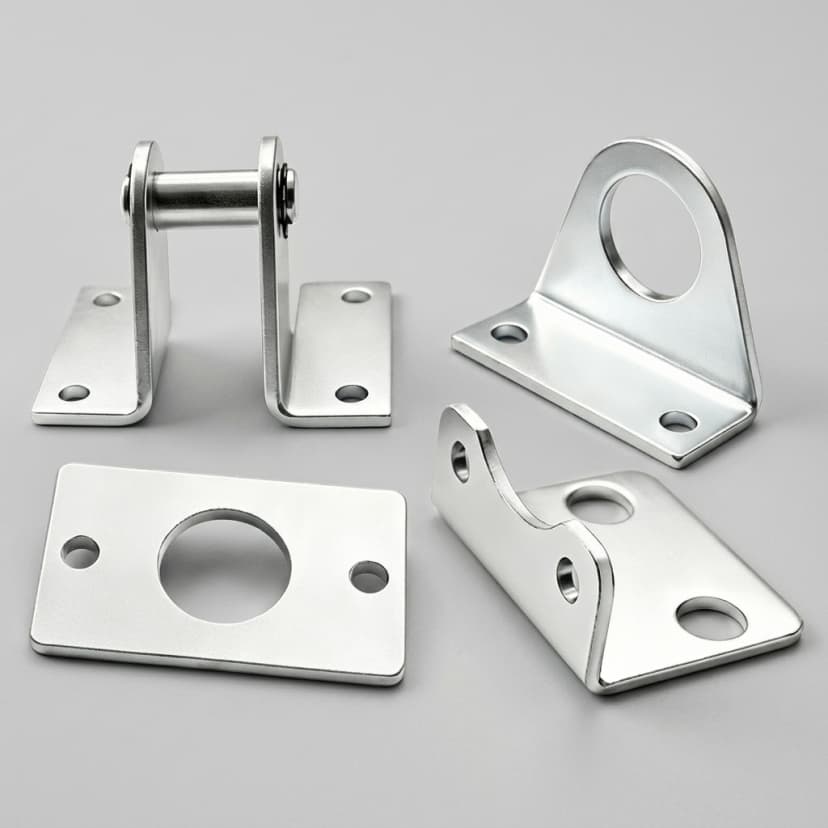
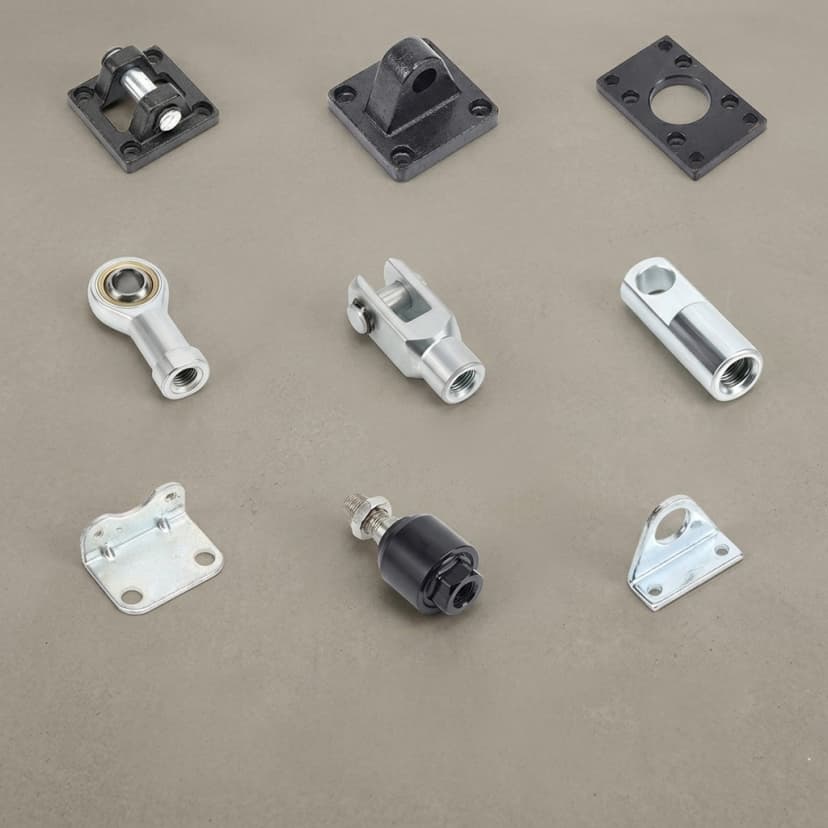
Actuator Connector Factory Visuals
Representative production samples of clevises, rod ends, and flanges machined in our facility.
Factory Standards & Evidence Ledger
| Topic | Source | Date | Used for | Limit |
|---|---|---|---|---|
| Quality Management Systems | ISO 9001:2015 Requirements | Checked July 23, 2026 | Guides our factory’s overall quality control, traceability, and continuous improvement protocols. | Does not replace industry-specific requirements like AS9100 for aerospace actuator connectors. |
| Process Capability Baseline | NIST/SEMATECH e-Handbook process capability guidance | Checked July 23, 2026 | Supports Cp/Cpk language as a statistical planning method for production-critical features. | A Cpk target such as 1.33 is a customer CTQ benchmark, not a public guarantee of connector defect rate. |
| Anti-Galling Treatment | Bodycote S3P / Kolsterising® process overview | Checked July 23, 2026 | Supports evaluating low-temperature diffusion treatment for stainless anti-galling connector applications. | Processor data sheets and order-specific coupons control suitability, hardness, and corrosion expectations. |
| First Article Reporting | SAE AS9102C First Article Inspection Requirements | Checked July 23, 2026 | Frames when an AS9102-style FAI package should be requested for aerospace or flow-down controlled connector work. | Does not prove AS9100 certification; supplier certificate scope must be verified during approval. |
| Thread Inspection Standards | ASME B1.3 standards listing | Checked July 23, 2026 | Identifies the official screw-thread gauging standard family for inch and metric thread acceptance planning. | The released drawing, thread class, and customer gauge plan control the actual inspection method. |
Factory Inspection & Quality Assurance Plan
| Factory Checkpoint | Verification Step | Evidence Output | Production Risk Mitigated |
|---|---|---|---|
| First Article Inspection (FAI) | Complete dimensional layout of the first production part against the print. | AS9102 or standard FAI report. | Catches misinterpretations before they scale into a defective batch. |
| In-Process SPC Gauging | Measure critical features (e.g., pin holes, threads) at defined intervals. | Control charts and capability indices (Cpk). | Identifies tool wear and thermal drift before parts go out of tolerance. |
| Final Plating/Finish Verification | Check coating thickness, adhesion, and visual quality after surface treatment. | Certificate of Conformance (CoC) from the plating partner. | Ensures corrosion resistance and prevents thread interference from over-plating. |
Contract Manufacturing Tradeoffs
Domestic Factory Production
- Best fit
- High IP sensitivity, tight supply chain integration, complex quality requirements.
- Tradeoff
- Higher per-unit cost compared to offshore high-volume sourcing.
- Mitigation
- Offset costs through DFM, automated fixtures, and reduced shipping/inventory overhead.
HMC with Tombstone Fixturing
- Best fit
- Volumes exceeding 1,000 units/year for complex connectors requiring multi-face machining.
- Tradeoff
- High upfront NRE (Non-Recurring Engineering) compared to a standard Vertical Machining Center (VMC).
- Mitigation
- Validate the payback with pilot-run cycle time, fixture approval, and annual volume before committing to dedicated tooling.
Turnkey Contract Manufacturing
- Best fit
- OEMs wanting to outsource the entire actuator connector supply chain.
- Tradeoff
- Requires relinquishing day-to-day control over individual sub-tier suppliers.
- Mitigation
- Establish clear quality agreements and require full material and finish certificates before shipment.
Factory Risk Matrix
Scaling production introduces unique supply chain and capacity risks. Review these common pitfalls before committing to a contract manufacturing agreement.
Capacity Constraints
Tooling Amortization
Plating Tolerance Stack-up
Production Scaling Scenarios
Scaling from Prototype to Production
Consolidating Suppliers
High-Mix, Low-Volume Contract
Factory RFQ Checklist
- Production drawings with GD&T and defined critical-to-quality (CTQ) features
- Annual Estimated Usage (EAU) and typical release quantities
- Material specifications, including approved substitutions
- Post-machining finish, plating, or heat treat requirements
- Quality documentation needs (FAI, Material Certs, Plating Certs)
- Packaging and kitting requirements for the assembly line
Related Factory Services
Choose the connector type, machining risks, and RFQ evidence before routing production work to a factory.
Broad overview of our factory capabilities for all actuator parts.
Technical focus on the machining processes and tolerances for connectors.
Verify we can hold your tight GD&T profiles, sub-thousandth positional tolerances, and Class 3 thread fits.
Deep dive into our CMM and thread gauging protocols.
Design considerations for the most common type of actuator connector.
Frequently Asked Factory Questions
What production volumes does your actuator connector factory handle?
The factory route is intended for low-to-medium volume contract manufacturing, typically from pilot lots through recurring monthly releases. Exact capacity depends on connector geometry, material, inspection burden, and whether secondary operations are controlled inside the same release plan.
How do you ensure consistent quality across large connector batches?
Production planning combines first-article approval, in-process gauging, defined CMM intervals, and SPC on drawing-critical features. Cp/Cpk targets such as 1.33 should be treated as customer CTQ planning gates, not a universal guarantee, and must be confirmed after pilot-run data.
Do you offer raw material sourcing for actuator connectors?
Yes. Actuator connector RFQs can include sourcing for 17-4PH stainless steel, 4140 alloy steel, 7075 aluminum, and brass or bronze alloys. The production plan should name the material standard, condition, mill certificate requirement, and lot traceability expectation before release.
Can your factory handle post-machining surface treatments?
Yes, when the RFQ defines the finish callout and acceptance evidence. Common managed steps include heat treatment, hardcoat anodizing, zinc or nickel plating, and stainless anti-galling diffusion processes such as Kolsterising®, subject to processor suitability and certificate review.
What is the standard lead time for contract manufacturing connectors?
For established production parts with agreed-upon blanket orders, we can ship on a just-in-time (JIT) basis. For new factory transfers, initial tooling, FAI, and pilot runs typically take 4-6 weeks depending on material availability and plating requirements.
How do you transition a prototype connector into factory production?
We start with a Design for Manufacturability (DFM) review to eliminate unnecessary tolerances and optimize tool paths. We then run a pilot batch, lock in the CNC program and workholding fixtures, and establish the final inspection control plan.
What evidence should I request before production approval?
Ask for a first-article report, material test reports, thread gauge records, CMM reports for datum-critical geometry, finish certificates, and a control plan showing inspection frequency for the features most likely to drift in production.
When is a factory route better than a prototype shop?
Choose a factory route when the connector has recurring demand, tight fit or thread requirements, controlled secondary operations, or buyer risk tied to lot traceability. A prototype shop may be faster for one-off geometry exploration.
Can you support AS9102 first-article reporting?
AS9102-style FAI can be requested when the drawing, purchase order, and supplier approval scope call for it. The exact forms, ballooning method, and characteristic accountability should be agreed before the pilot run.
What information changes the routing recommendation most?
Batch size, material family, thread class, datum scheme, cross-hole true position, finish thickness, and inspection report requirements have the largest effect on routing, lead time, and factory risk.
How are supplier-managed finishing steps controlled?
The RFQ should specify approved processors where required, coating thickness or hardness targets, pre- and post-finish masking rules, and the certificate package needed before the connector lot can ship.
What are the limits of the factory assessment tool?
The tool is a routing screen, not a quote or capability certification. Final manufacturability depends on drawing review, customer specifications, material availability, fixture design, and pilot-run inspection data.
Inquiry Email
Include drawings, material, finish, tolerances, quantity, and delivery location.