
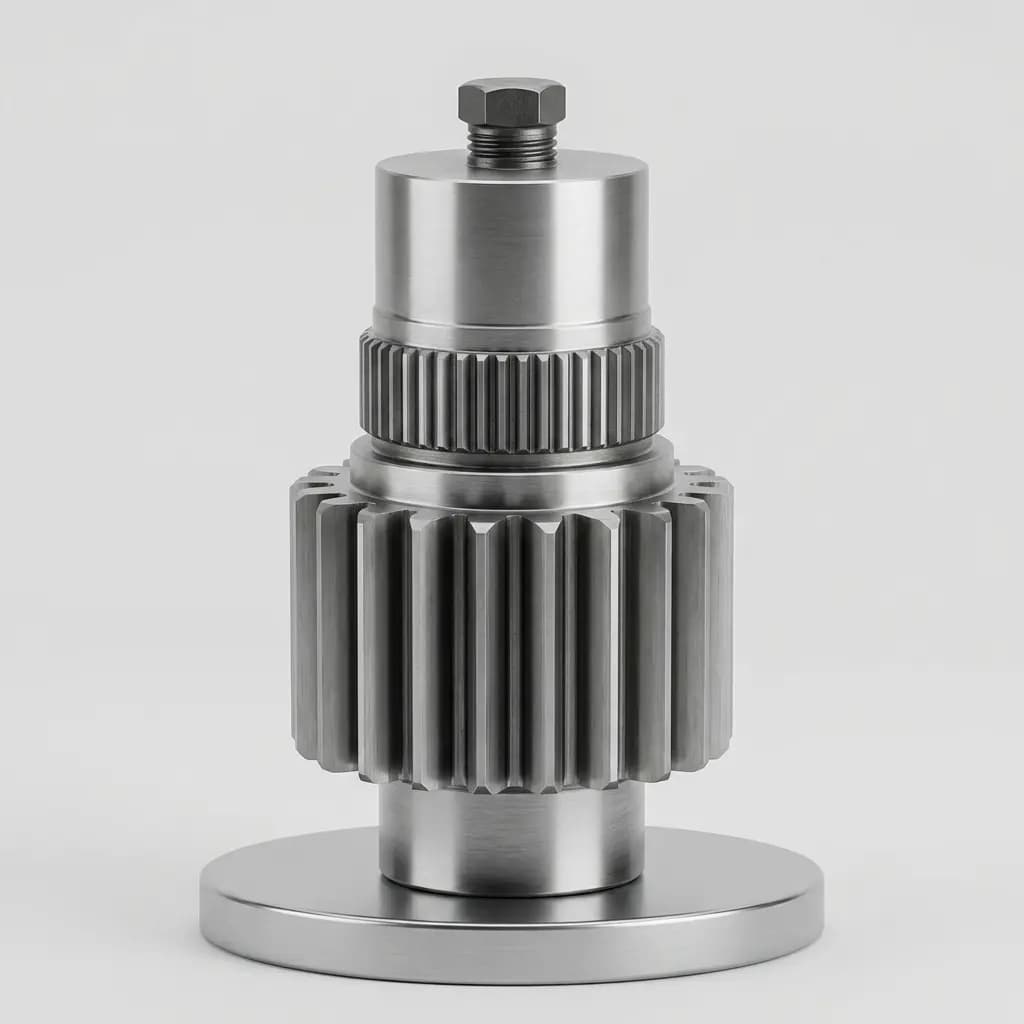
Dimensional Inspection for OEM Actuator Parts: CMM, Profilometers, and First Article Approval
A buyer's guide to First Article Inspection (FAI), CMM measurements, surface roughness (Ra/Rz), and material traceability for outsourced actuator components.
When transitioning a custom actuator component from a 5-piece prototype run to a 5,000-piece mass production order, trust is not enough. You need empirical data.
Many procurement teams experience the "Prototype Trap": the first 5 samples work perfectly, but the first mass production batch seizes on the assembly line. This happens because the supplier's Quality Control (QC) and First Article Inspection (FAI) processes were not strictly defined.
1. The Complete QC Instrument Matrix
Different actuator features require different measurement instruments. Using the wrong tool can give false "pass" readings.
| Feature to Inspect | Correct Instrument | Resolution | Incorrect Instrument | Why It Fails |
|---|---|---|---|---|
| Shaft Diameter (Ø20 h6) | Outside Micrometer (0-25mm) | 0.001mm | Caliper | Caliper resolution (0.02mm) cannot distinguish h6 from h7 |
| Bearing Bore (Ø40 H7) | Bore Gauge / CMM | 0.001mm | Caliper | Same resolution issue; bore gauges prevent parallax error |
| True Position (GD&T) | CMM | 0.002mm | Pin gauges + ruler | Cannot measure 3D coordinate deviation |
| Perpendicularity (flange) | CMM or Granite Surface Plate + DTI | 0.005mm | Visual / Square | Cannot detect 0.05° errors that cause motor shaft bending |
| Parallelism (rail surfaces) | CMM or Height Gauge | 0.005mm | Feeler gauge | Feeler gauges only measure at edges, missing center bow |
| Surface Roughness (Ra) | Stylus Profilometer | Ra 0.01 μm | Visual comparison block | Subjective; cannot distinguish Ra 0.4 vs Ra 0.8 |
| Thread Depth (M6×1.0) | Thread Plug Gauge (Go/No-Go) | Pass/Fail | Caliper depth rod | Cannot verify pitch diameter or thread form |
2. How to Read an FAI Report (Red Flags)
A valid FAI report maps every dimension on the drawing to a measured value. When you receive one from your supplier, check for these red flags:
| Red Flag | What It Means | Buyer Action |
|---|---|---|
| Every measured value = exact nominal (e.g., 20.000mm) | Report is likely fabricated. Real machining always has variance. | Reject. Request re-inspection with calibrated instruments. |
| Missing GD&T features (no TIR, no true position) | Supplier may lack a CMM. Only checking with calipers. | Escalate. Demand CMM data for all position and form tolerances. |
| "Surface finish: OK" (no Ra number) | Subjective visual check, not instrument measurement. | Reject. Require profilometer readout with Ra and Rz values. |
| No Material Test Report (MTR) | Material may be substituted (e.g., 6061 swapped with 6063). | Hold shipment. MTR from the raw material mill must accompany every lot. |
| Measurement uncertainty not stated | Cannot verify if the instrument can actually resolve the tolerance. | Request instrument calibration certificates with stated uncertainty. |
3. Surface Roughness: Why Ra Alone Is Dangerous
Most drawings specify Ra (Average Roughness). However, Ra can be misleading for dynamic seal surfaces. (If you’re choosing a surface treatment, the post-treatment roughness is what matters.)
4. Material Traceability: MTR Requirements
The geometry means nothing if the material is wrong. Substituting 7075-T6 with cheaper 6063-T5 will cause high-load brackets to yield and deform.
| MTR Field | What to Check | Why |
|---|---|---|
| Heat Number | Must match the physical stamp on the raw bar | Prevents lot mixing at the supplier |
| Chemical Composition | Must match the ASTM/AISI standard for specified alloy | Prevents silent alloy substitution |
| Mechanical Properties | Yield strength, tensile strength, elongation | Ensures material meets structural design assumptions |
| Heat Treatment Condition | T6, H900, Normalized, etc. | Wrong temper = wrong hardness = wrong fatigue life |
5. The "Bulletproof" QA Clause for Your Purchase Order
When placing a PO for custom actuator machining, append this clause to your Terms:
Require the FAI Package
Supplier must provide a full Level 3 PPAP / FAI package with the first production shipment. Package must include a ballooned drawing with 100% dimensional data.
Mandate CMM Data
All GD&T features (true position, perpendicularity, parallelism, concentricity) must be measured and reported using a calibrated CMM with stated measurement uncertainty.
Demand Profilometer Readings
All surfaces contacting dynamic seals must include a profilometer readout reporting both Ra and Rz values.
Require Material Traceability
Original raw material MTR (Mill Test Report) from the smelter/mill must accompany each production lot. Heat number must be traceable to the physical bar stock.
Enforce Consequences
Parts received without corresponding FAI documentation will be quarantined and payment withheld pending re-inspection at buyer's facility.
What to Inspect First — By Part Type
Critical dimensions: Bearing journal diameter (Ø20 h6), overall length. GD&T: Runout (TIR), straightness, cylindricity. Surface: Ra/Rz on seal and bearing journals. Material: MTR for alloy and hardness (especially induction-hardened journals). See our tolerance guide for exact specs.
Critical dimensions: Bearing bore diameters (H7), center distance between bores. GD&T: True position of bores, perpendicularity of mounting face. Surface: Anodize thickness verification (if applicable). Check for anodize dimensional shift. Material: MTR for aluminum alloy (6061-T6 vs. 6063-T5 matters for thermal performance).
Critical dimensions: Tooth profile, pitch diameter, bore ID. GD&T: Runout on bore relative to tooth profile. Surface: Black oxide thickness (should be ~zero growth). Hardness check (HRC 58–62 if case-hardened). Quality: DIN/AGMA grade verification per backlash spec.
Frequently Asked Questions
Author

Categories
More Posts
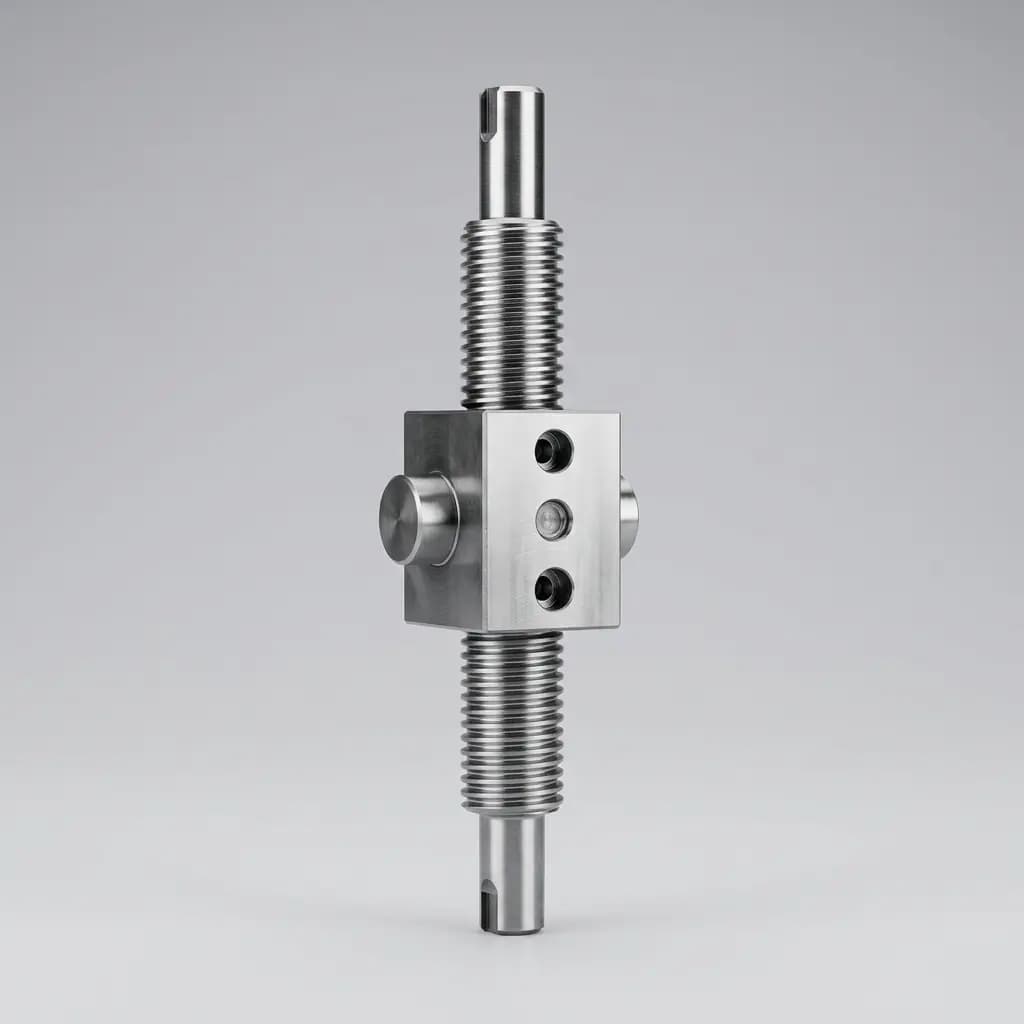
Actuator Machining EU CBAM 2026 Downstream Risk
Actuator machining buyers: map EU CBAM downstream risk, 2028 exposure, TARIC codes, PCF data, and RFQ clauses before quoting.
ISO 5211:2026 Actuator Machining and Valve Integration
ISO 5211:2026 affects part-turn actuator machining, valve integration, and RFQ checks. See scope limits, dates, risks, and buyer actions before ordering.
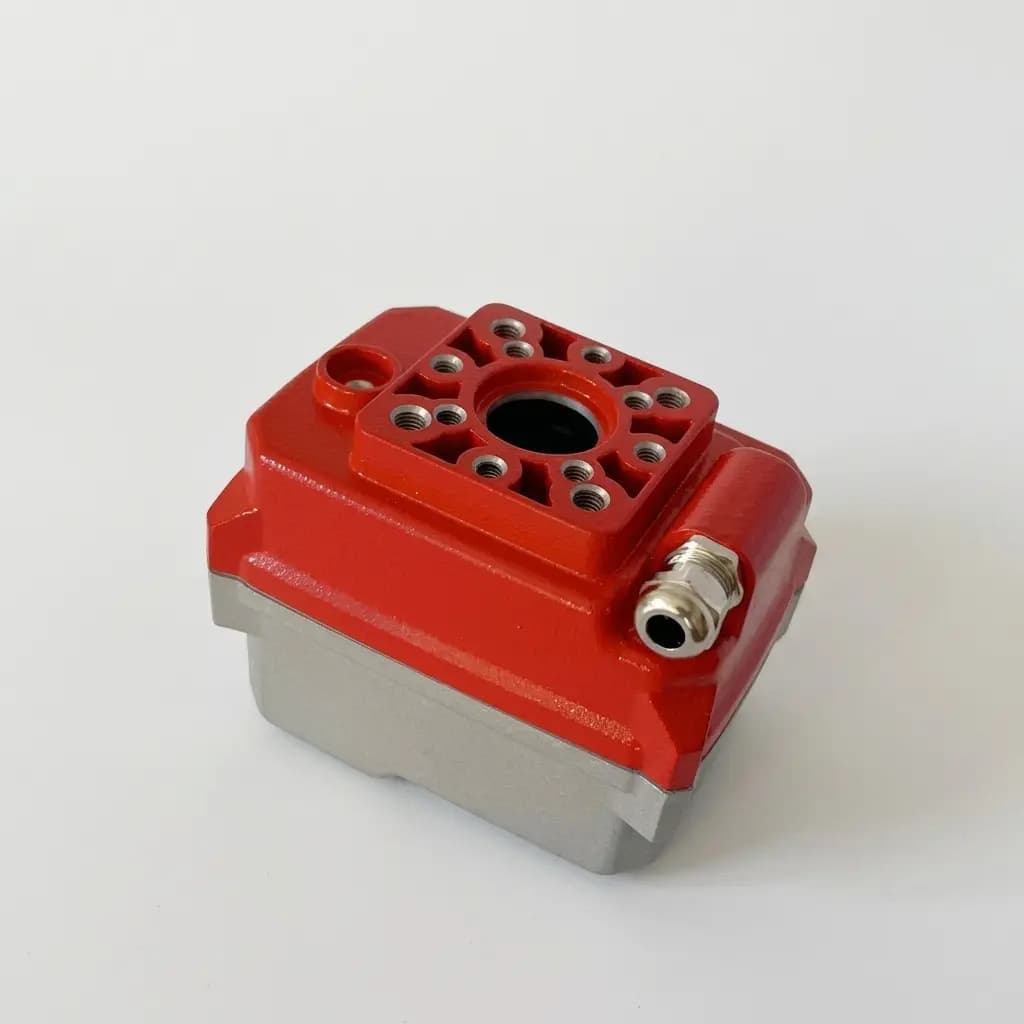
Thermal Dissipation in Actuator Housings: Fin Design, Material Selection, and Emissivity
How to design actuator housings for thermal management: aluminum alloy conductivity, CNC fin constraints, surface emissivity, and DFM rules.