LogoActuator Machining
Start inquiry
LogoActuator Machining
WhatsApp
LogoActuator Machining

China-based actuator component machining supplier supporting OEM customization, inspection planning, and global delivery.

Inquiry Email

[email protected]

Email app

Include drawings, material, finish, tolerances, quantity, and delivery location.

Instant Chat

+86 188 5797 1991

Chat on WhatsApp

Direct response from our engineering team.

Products
  • Actuator Housings
  • Precision Shafts & Rods
  • Custom CNC Assemblies
Solutions
  • Robotics Components
  • Automation Equipment
  • Valve & Fluid Control
  • Aerospace & Defense
OEM Capabilities
  • Drawing Review & DFM
  • Prototype to Batch
Resources
  • Blog
  • CNC Capabilities
  • Materials & Finishes
  • Quality & Inspection
  • About
  • Contact / RFQ
  • Privacy Policy
  • Cookie Policy
  • Terms of Service
© 2026 Actuator Machining. All Rights Reserved.|Backed by Linkup Ai Co., Ltd. Manufacturing delivered by the Advanced Manufacturing Division of Linkup Precision.|Legal entity: Linkup Ai Co., Ltd.
Hybrid DFM screener and sourcing guide

Actuator Body Machining Guide & Calculator

Check whether an actuator body looks like a standard bore, thin-wall risk, deep-hole routing problem, or manual RFQ review before you send drawings.

Inputs

Length, OD, bore, material, and bore feature.

Output

L/D, wall thickness, risk, limits, and next action.

Review date

July 5, 2026; screening only, not release approval.

Check routing nowReview evidence
Send body drawing after screening

Configure Actuator Body

Adjust parameters to check deep-hole boring risks and process complexity.

Range: 20-1000 mm.

Range: 10-500 mm.

Range: 5-480 mm.

Manufacturability Analysis

Ready to check routing

Run the checker to calculate the L/D ratio, wall thickness, complexity risk, applicability limits, and next action for the current actuator body inputs.

Output you will get
  • Length-to-bore ratio and remaining wall thickness.
  • Low, medium, or high routing complexity.
  • Manual review triggers and RFQ next step.
Decision summary

What to decide before quoting an actuator body

These conclusions connect the calculator output to sourcing action. Each item shows the evidence family and the limit of the guidance.

An actuator body is the controlled housing around the motion system.

For sourcing and DFM, treat it as the part that fixes the bore axis, seal surface, ports, mounting faces, and datum chain, not just as a generic tube.

ASME Y14.5 and ISO 1101 drawing-language references

Length-to-bore ratio drives the first routing decision.

Short bores can often be turned and bored directly. Longer overhangs need damped or carbide-reinforced boring systems, two-sided boring, gun drilling, BTA, or a design split.

Sandvik Coromant and Kennametal boring guidance

Seal-grade bores need texture control beyond a single Ra number.

Dynamic piston and rod seals can fail when a bore is directionally turned, too rough, or too smooth to retain lubrication. RFQs should name Ra/Rz/Rp or bearing-ratio needs when the seal supplier requires them.

Trelleborg counter-surface white paper

Thin walls and legacy concentricity callouts are quote-risk triggers.

Wall stability, datum interpretation, and inspection method can change the manufacturing route more than nominal diameter does. Mark those as review items before releasing a batch quote.

ASME Y14.5 drawing-language context

Machining route map

The calculator gives an early read on route complexity. The process map shows where the risk usually enters: deep-hole roughing, cross-port milling, finish boring, honing, and final inspection.

Actuator body routing map

The route changes by complexity and material. Use this as a quote checklist, not as a universal process plan.

Actuator body process mapFive process stages: material, rough turning, milling, finish boring, and inspect.1Material

Aluminum / Steel / Stainless

2Rough Turning

Deep hole drill & rough bore

3Milling

Ports, flanges, mounting holes

4Finish Boring

Size bore & seal grooves

5Honing/Inspect

Bore finish & final CMM

Control point: Ensure surface finish and concentricity are defined on drawings.
Screening table

Technical specifications and tolerance triggers

Use these as RFQ questions, not as universal acceptance criteria. Final values must come from the released drawing and actuator duty case.

PropertyTypical screening valueUse / limitEvidence needed
L/D RatioShort-bore reviews usually stay below 5:1; 10:1+ needs tooling reviewRatios above 14:1 are manual-review cases and may need gun drilling, BTA, two-sided boring, or a split design.Sandvik and Kennametal boring-overhang guidance.
Wall ThicknessUnder 2-3 mm is a thin-wall review triggerThin walls can distort during clamping, roughing, finishing, coating, or heat treatment. Review workholding pressure.DFM screening rule; confirm with released drawing and material condition.
ConcentricityUsually driven by bore-to-bearing seat relationshipDo not over-constrain OD if it does not mate with another part.ASME Y14.5 / ISO GPS principles for functional datums.
Surface Finish (Bore)Do not rely on Ra alone for dynamic seal boresHoning, roller burnishing, lay direction, Rz/Rp/Rmr, and seal-family guidance may control leakage and wear.Trelleborg counter-surface guidance and seal-supplier review.
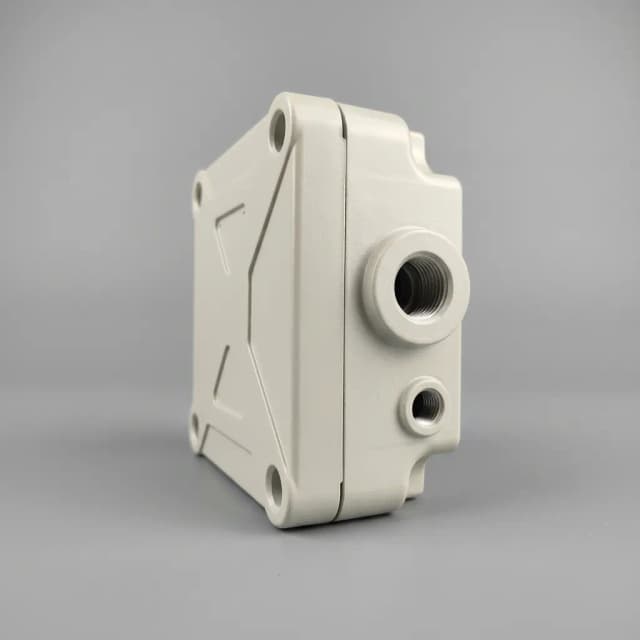
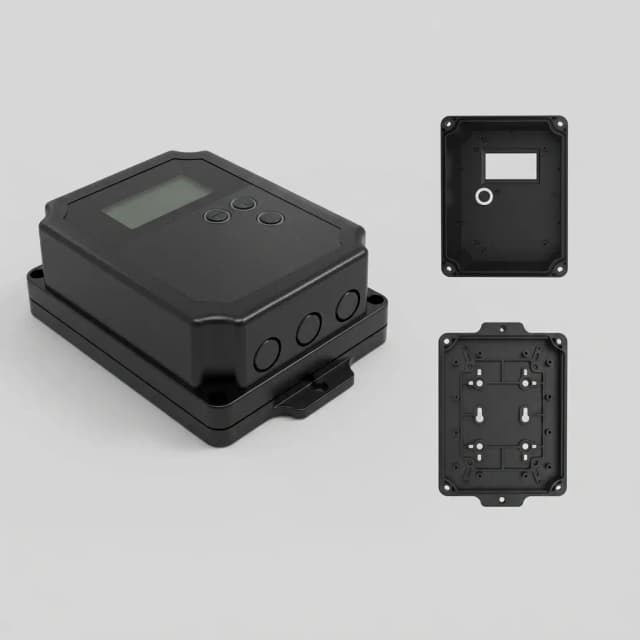
CNC machined actuator housing with precision bore and mounting face

Precision bore inspection

Custom actuator housing component with sealing surfaces

External milling features

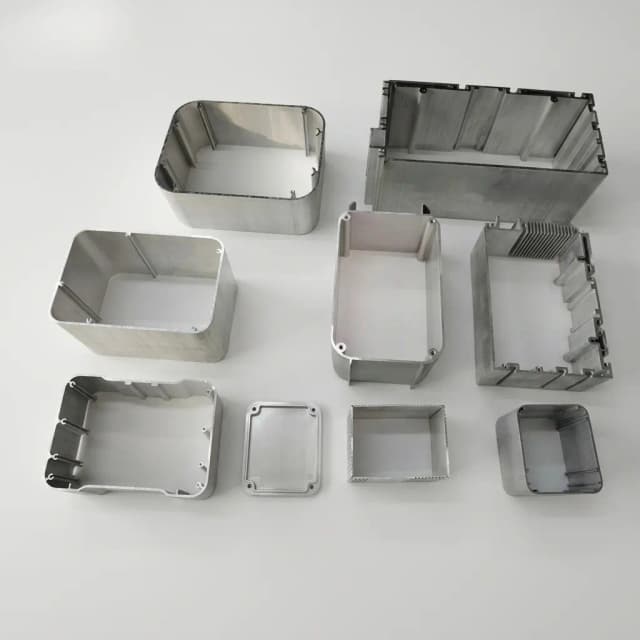
Actuator housing machined from aluminum alloy block

Final assembly condition

Evidence, assumptions, and limits

Reviewed July 5, 2026. Time-sensitive tooling and standards references are linked so a buyer can verify scope before using the calculator result in an RFQ.

ClaimBasisSourceLimit
Deep-bore routing depends on boring-bar overhang and vibration control.Public tooling guidance from Sandvik and Kennametal separates short steel-bar boring, damped boring, and extended-overhang vibration-free boring. This supports using L/D as a screening trigger, not a release rule.Sandvik Coromant Silent Tools application guideActual limit still depends on bore diameter, toolholder, insert geometry, coolant access, material, machine rigidity, and whether the bore can be approached from both ends.
Dynamic seal surfaces need more than a generic turned finish.Seal-supplier guidance distinguishes roughness, profile shape, lay direction, and bearing-area style parameters. The page therefore treats honing or burnishing as a design decision, not cosmetic finishing.Trelleborg sealing counter-surface white paperSeal family, pressure, fluid, speed, lubrication, and mating material override any generic finish range on this page.
GD&T and datum wording determine what must actually be inspected.ASME Y14.5 and ISO 1101 define the language used to communicate form, orientation, location, run-out, and related drawing requirements.ASME Y14.5 standards pageStandards define communication rules; the actual tolerance values must come from the actuator load case, seal design, bearing interface, and supplier capability.
Actuator-body terminology is ambiguous across electric, pneumatic, hydraulic, and valve-actuator products.The page keeps one canonical learn URL for the broad keyword and separates body/housing definition, cylindrical bore screening, valve-body distinction, and machining-service next steps.Keyword governance and current page scopeBrand-specific replacement parts, automotive throttle bodies, and actuator body spray are intentionally outside this machining decision page.
ASME Y14.5 - Dimensioning and Tolerancing

Official ASME standards page used for GD&T communication context. Verified July 5, 2026.

ISO 1101:2017 geometrical tolerancing

Official ISO listing for form, orientation, location, and run-out tolerance language. Browser access can vary by region. Verified July 5, 2026.

Sandvik Coromant Silent Tools application guide

Primary tooling-source context for boring overhang and vibration-control screening. Verified July 5, 2026.

Kennametal vibration-free boring bars

Primary tooling-source context for damped boring and extended overhang. Verified July 5, 2026.

Trelleborg counter-surface guidance

Seal-supplier white paper used for surface texture, profile, and counter-surface screening. Verified July 5, 2026.

Boundaries, comparisons, and sourcing risks

The broad keyword can mean different part families. This section keeps the tool output tied to the correct decision.

TermLikely intentMachining focusNext step
Actuator bodyBroad definition, sourcing criteria, bore feasibility, and quote readiness.Main structure that carries bore, ports, mounting faces, seals, and datum chain.Use this page and the calculator first.
Actuator housingOften interchangeable with body, but more likely to include bearing seats, gear pockets, or covers.Pocket milling, bearing fits, gasket faces, thermal growth, and alignment datums.Compare bearing-housing or material-specific housing pages.
Cylinder tube / barrelUsually narrower: a honed tube or barrel for hydraulic/pneumatic piston travel.ID finish, straightness, wall thickness, end features, and corrosion protection.Confirm seal surface callouts before quoting.
Valve body actuatorUsually a different component family: flow-control valve body connected to an actuator.Ports, seats, pressure cavities, leakage paths, and fluid-control standards.Do not merge into this generic body page unless the body itself is being machined.

Early RFQ screening

Trust: Use the calculator to flag L/D, wall thickness, material, and finish risks before sending a drawing.

Do not use when: Do not use it as pressure-vessel certification, safety validation, or a substitute for released drawing review.

Design-for-manufacturing review

Trust: Use the tables to decide which callouts must be clarified: bore finish, datum scheme, runout, port deburr, and inspection method.

Do not use when: Do not assume the listed ranges apply to cast blanks, welded bodies, proprietary seal packs, or safety-critical lift/brake actuators.

Supplier comparison

Trust: Use the evidence rows to ask whether the supplier has deep-bore tooling, honing, CMM/air-gauge checks, and low-stress workholding.

Do not use when: Do not rank suppliers on price alone when thin walls, long bores, or dynamic seals control service life.

Misuse risk

Trigger: Treating a broad actuator-body keyword as a released manufacturing spec.

Impact: The quote can miss pressure rating, seal family, coating thickness, datum standard, or inspection requirements.

Mitigation: Use the page for screening only, then submit the 2D drawing, STEP model, material condition, and drawing standard revision.

Cost risk

Trigger: Specifying very deep bores, tight cylindricity, and honed surface texture without confirming functional need.

Impact: Damped boring, gun drilling, honing, special jaws, and controlled inspection can dominate unit cost.

Mitigation: Separate must-have functional tolerances from convenience dimensions before requesting a production quote.

Scenario mismatch

Trigger: Using cylindrical-body rules for a gear housing, valve body, cast manifold, or replacement consumer part.

Impact: The chosen process route, inspection plan, and supplier shortlist can be wrong.

Mitigation: Match the part family first: body/tube, bearing housing, valve body, cover, bracket, or assembled actuator package.

Inspection gap

Trigger: Calling only OD/ID diameters while omitting straightness, runout, port burr limits, and bore texture.

Impact: A part can pass simple dimensions but leak, bind, wear seals, or fail assembly alignment.

Mitigation: Add measurable acceptance criteria and evidence type: CMM, bore gauge, air gauge, profilometer, or visual burr standard.

Scenario examples

Use these examples to decide whether the calculator result is enough or whether a narrower actuator-body route should be reviewed.

Hydraulic cylinder-style body

Assumptions: Long bore, dynamic piston seal, steel or alloy steel, pressure and leakage requirements.

Likely result: Deep-bore route and seal texture dominate cost; honing/burnishing and bore inspection are likely needed.

Next action: Provide bore length, ID, pressure class, seal supplier, surface texture callouts, and allowed approach from one or both ends.

Pneumatic actuator body

Assumptions: Aluminum body, lighter pressure load, cross-ports, anodizing, and moderate bore finish.

Likely result: Port burr control, anodize allowance, and thin-wall stability become the main DFM questions.

Next action: Send anodizing type, port geometry, bore finish, and whether post-anodize sizing is allowed.

Electric actuator housing/body

Assumptions: Bearing seats, gear or nut pocket, motor pilot, and cover interface rather than one long pressure bore.

Likely result: The generic body calculator is less decisive; bearing fit, pilot concentricity, and thermal growth matter more.

Next action: Use this page for terminology, then review bearing-housing and assembly-alignment pages before RFQ.

Related next steps

Keep the broad actuator body page as the starting point, then move to the narrower page that matches the drawing.

Actuator Body CNC Machining

Move from learn-mode screening to a service RFQ route for custom machined bodies.

Actuator Bearing Housing

Use when the body question is really about bearing seats, fit classes, and housing-bore retention.

Actuator Assembly

Use when body alignment depends on mating brackets, pilots, dowels, or multi-part stack-up.

6061 Aluminum Actuator Housing

Use when the design centers on lightweight aluminum, anodizing, and thermal-growth tradeoffs.

Frequently Asked Questions

What is an actuator body?

The actuator body (or housing) is the main outer structure that contains the piston, rod, and internal fluid or mechanical drive mechanism. It must withstand internal pressure and guide the moving components.

Is an actuator body the same as an actuator housing?

Often yes in buyer language, but not always in drawings. Body commonly refers to the main structural shell or pressure cylinder, while housing can also mean a bearing, gear, or motor enclosure. The drawing should define the controlled features, not rely on the name alone.

Is an actuator body the same as a valve body?

No. A valve body controls fluid passages, seats, and leakage paths. An actuator body usually holds the motion mechanism or pressure bore. A valve-and-actuator assembly may include both, but they should not share one machining assumption.

How do you machine a deep bore in an actuator body?

Depending on the L/D (length-to-diameter) ratio, deep bores are machined using standard boring bars (up to 4-6x D), damped boring bars (up to 10-14x D), or gun drilling / BTA drilling for extreme depths.

When does an actuator body need gun drilling or BTA drilling?

Use manual review when the bore is too deep for a stable single-point boring bar, when chip evacuation is uncertain, or when straightness and finish cannot be held from one side. The calculator flags this as a routing risk, not as an automatic process selection.

Why is bore straightness important?

Bore straightness prevents the piston seals from experiencing uneven wear, blow-by, or binding during stroke. It is critical for the efficiency and lifespan of the actuator.

What materials are commonly used for actuator bodies?

Common materials include 6061-T6 or 7075-T6 aluminum for weight-sensitive applications, 1045 or 4140 steel for high-pressure hydraulics, and 304/316 stainless steel for corrosive environments.

Can you hone the bore of an actuator body?

Yes, honing is the standard process for achieving the precise surface finish (Ra 0.4 or better) and cross-hatch pattern required for dynamic seals.

Why is Ra alone not enough for dynamic seal surfaces?

Ra is only an average roughness value. Two surfaces can share a similar Ra but have different peak height, valley depth, lay direction, and bearing ratio. For dynamic seals, the drawing may need Rz, Rp, Rmr/tp, or a seal-supplier surface specification.

What information is needed to quote an actuator body?

Send a 2D drawing with drawing standard revision, datum scheme, bore tolerance, runout/cylindricity/profile controls, surface texture, material condition, coating, quantity, and inspection requirements. Add a STEP model for geometry review.

Should I specify concentricity for an actuator body bore?

Only if the governing drawing standard and inspection method require it. For many new drawings, total runout, circular runout, position, or profile communicates coaxial function more directly. Legacy drawings should be reviewed before changing callouts.

What does the actuator body calculator not cover?

It does not calculate pressure rating, finite element stress, seal wear life, coating build-up, heat treatment movement, corrosion allowance, or customer-specific safety requirements. It is a quoting and DFM screening tool.

Can this page be used for electric actuator bodies?

Yes for terminology and general machining risk, but electric actuator housings often depend more on bearing fits, motor pilots, gear pockets, and thermal behavior than on long pressure bores. Use the related housing pages when those features drive the design.

Need Custom Machined Actuator Bodies?

Send drawings for precision turning, milling, and bore finishing review. Include material condition, tolerance, finish, and annual volume so engineering can validate the route before quoting.

Inquiry Email

[email protected]

Email app

Include drawings, material, finish, tolerances, quantity, and delivery location.

Instant Chat

+86 188 5797 1991

Chat on WhatsApp

Direct response from our engineering team.