
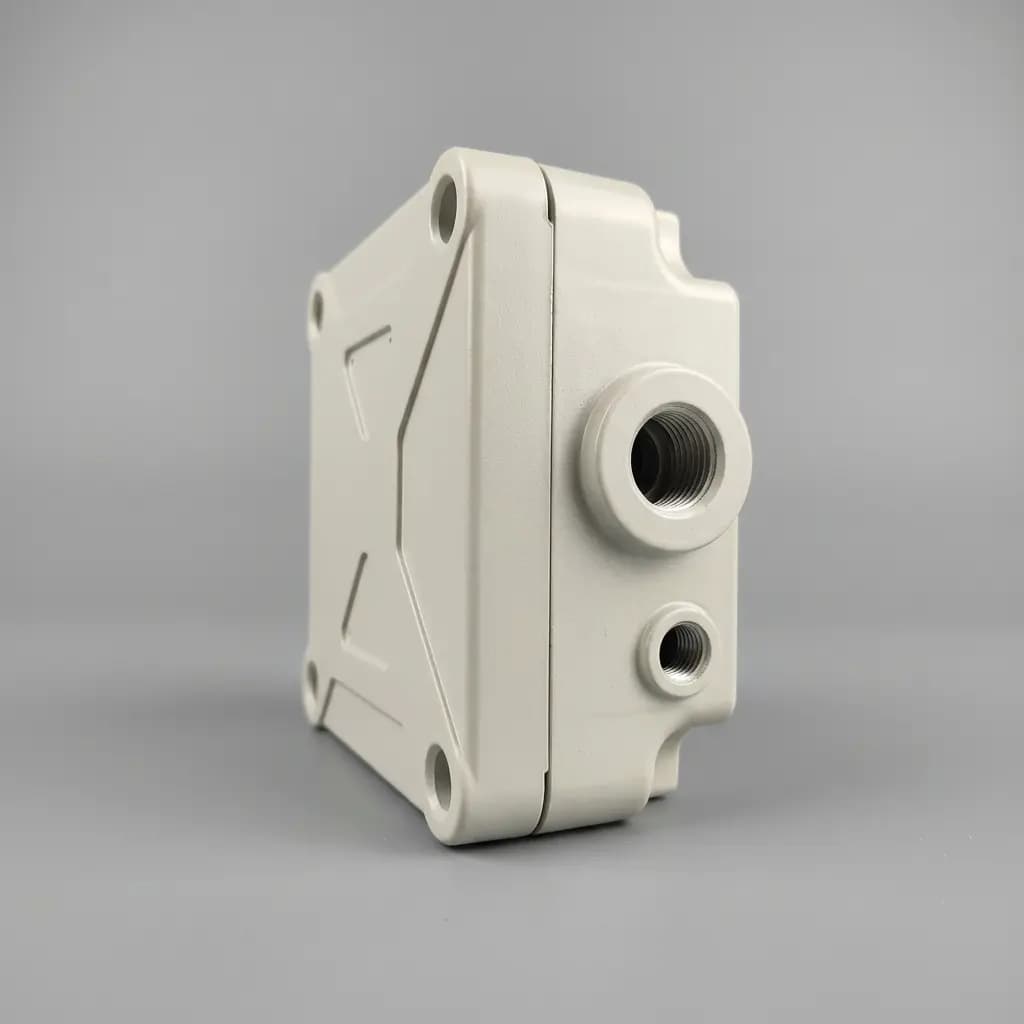
How to Reduce Cost in Custom Actuator Housing Manufacturing (DFM Guide)
Actionable Design for Manufacturing (DFM) tips with quantified cost penalties, CNC tool physics, and volume transition strategies for custom actuator housings.
The housing is the most expensive machined component in a custom actuator assembly. It acts as the structural foundation—aligning bearings, housing the gear train, and sealing the internal electronics from harsh industrial environments.
However, an over-engineered housing can drive CNC machining costs up by 300% without adding any functional value. By applying Design for Manufacturing (DFM) principles early in the CAD phase, engineering teams can cut unit costs significantly as prototypes scale into batch production.
1. The Four Major Cost Drivers
Before modifying your CAD, understand exactly what drives the cost on a CNC mill. The table below quantifies the penalty for common design mistakes:
| Design Feature | Machining Impact | Cost Penalty | DFM Solution |
|---|---|---|---|
| Features on 5-6 sides | Multiple flips + custom fixtures | +40% to +80% | Consolidate features to 1-2 primary faces |
| Deep, sharp internal corners | Requires ≤2mm end mills at extreme L:D ratios | +150% | Add corner radii ≥ 1/3 of pocket depth |
| Mixed thread sizes (M3+M4+M5+M6) | Extra tool changes per unique size | +15% | Standardize to M4 + M6 only |
| Blind tapped holes > 2×D deep | Chip packing risk, broken taps | +25% scrap | Limit thread depth to 1.5×D |
2. Eliminate the "Six-Sided" Setup Problem
Every time a machinist unclamps a housing, flips it, sweeps it with an indicator, and reclamps it, you pay for machine idle time. This is known as a "setup."
- The Problem: Mounting flanges on the bottom, motor bore on the back, output shaft on the front, and sensor ports on the sides = 4 to 6 setups on a 3-axis mill.
- The DFM Fix: Consolidate all critical features (bearing bores, motor mount, tapped holes) to the top face. Use through-holes instead of blind holes where possible so the same feature is accessible from both sides in a 2-op setup.
3. The Deep Pocket Trap: L:D Ratio Physics
CNC end mills are cylindrical. They physically cannot cut a perfectly sharp 90-degree internal corner. If your CAD model features a deep, square pocket to house a custom PCB, the machinist is in trouble. (The same L:D physics apply when machining cooling fins for thermal management.)
Corner Relief Strategies
If a mating square component (e.g., a PCB or encoder) must fit in the pocket, use one of these standardized corner relief patterns:
| Strategy | Sketch Description | When to Use |
|---|---|---|
| Standard Radius | Add R3-R5 radii to all internal corners | Default. Mating part has matching radii or is round. |
| Dog-Bone Relief | Small circular overcut at each corner | Mating part has sharp 90° corners. PCBs and plates. |
| T-Bone Relief | Elongated slot at each corner | Heavy structural brackets with tight corner clearance. |
4. Volume Transition Strategy: Billet → Extrusion → Casting
If your actuator production exceeds 500 units/year, starting from a solid rectangular billet of 6061-T6 aluminum becomes mathematically indefensible. You pay for a 5kg block and then machine 4kg into chips.
| Production Method | Tooling Cost | Per-Unit Material | Per-Unit Machining | Best for Volume |
|---|---|---|---|---|
| Billet (6061-T6) | $0 | ~$12 (5kg block) | ~$25 (full machining) | 1 to 500 pcs/yr |
| Extrusion Blank (6063-T5) | ~$1,500 die | ~$4 (cut from profile) | ~$10 (secondary ops only) | 500 to 5,000 pcs/yr |
| Die Cast (A380) | ~$10,000+ mold | ~$1.50 (net shape) | ~$4 (bore + tap only) | 5,000+ pcs/yr |
5. Standardize Your Fasteners
It is common to see a housing drawing calling for M3, M4, M5, and M6 holes. Each unique thread requires three tools in the CNC carousel: a spot drill, a tap drill, and the tap itself.
Actionable Advice for your next design: Standardize the entire actuator to use M4 and M6 hardware exclusively.
| Thread | Tap Drill | Thread Engagement for Max Strength (Al) | Rule |
|---|---|---|---|
| M3 | Ø2.5mm | 4.5mm (1.5×D) | Avoid unless space-critical |
| M4 | Ø3.3mm | 6mm (1.5×D) | Use for sensor covers, light plates |
| M5 | Ø4.2mm | 7.5mm (1.5×D) | Avoid — use M4 or M6 instead |
| M6 | Ø5.0mm | 9mm (1.5×D) | Use for motor mounts, load-bearing flanges |
Thread depths beyond 1.5×D in aluminum add zero additional tensile strength but sharply increase the risk of tap breakage inside the housing — a $25 part instantly becomes scrap.
Frequently Asked Questions
Author

Categories
More Posts
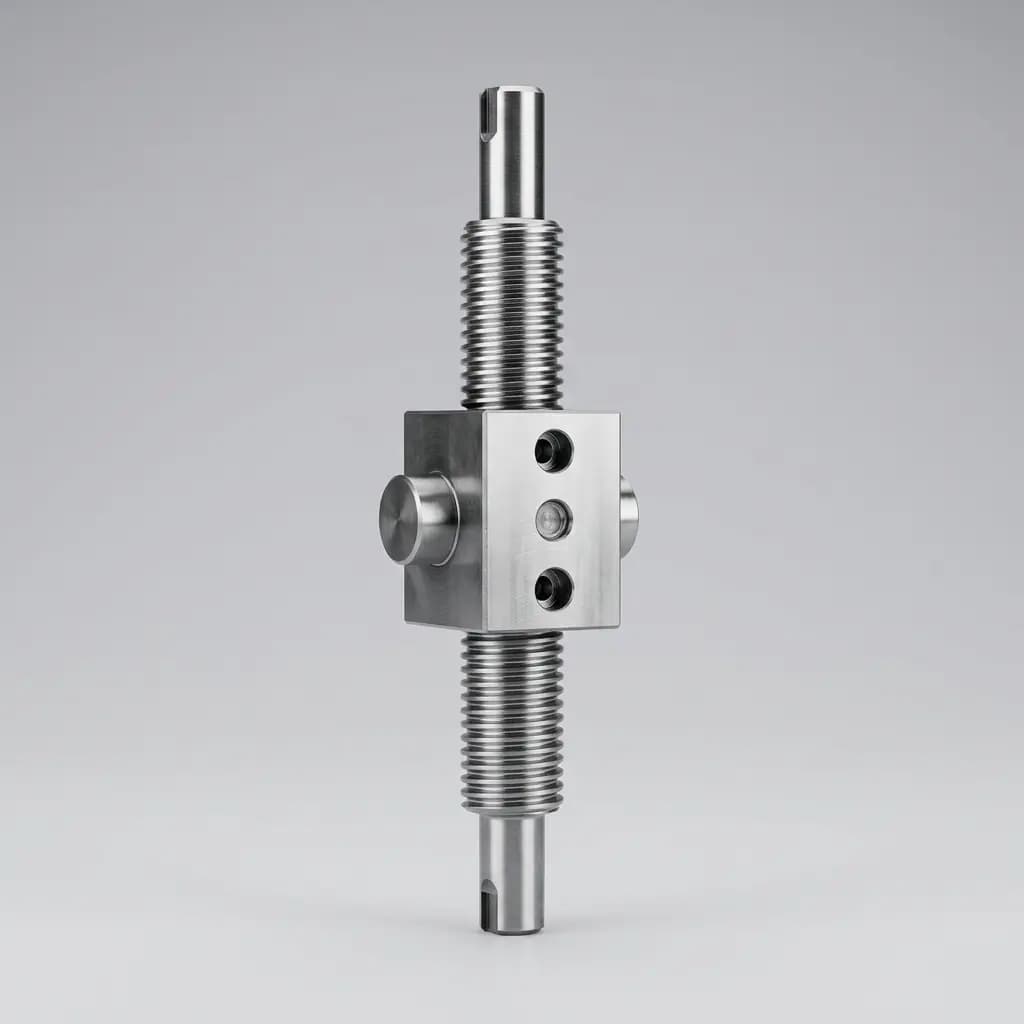
CNC Machining Tolerances Guide for Actuator Shafts: ISO 286 Fits, Cost Multipliers, and GD&T
Engineering reference for selecting ISO 286 tolerances, specifying GD&T callouts, and managing CNC cost multipliers on linear and rotary actuator shafts.
ISO 5211:2026 Actuator Machining and Valve Integration
ISO 5211:2026 affects part-turn actuator machining, valve integration, and RFQ checks. See scope limits, dates, risks, and buyer actions before ordering.
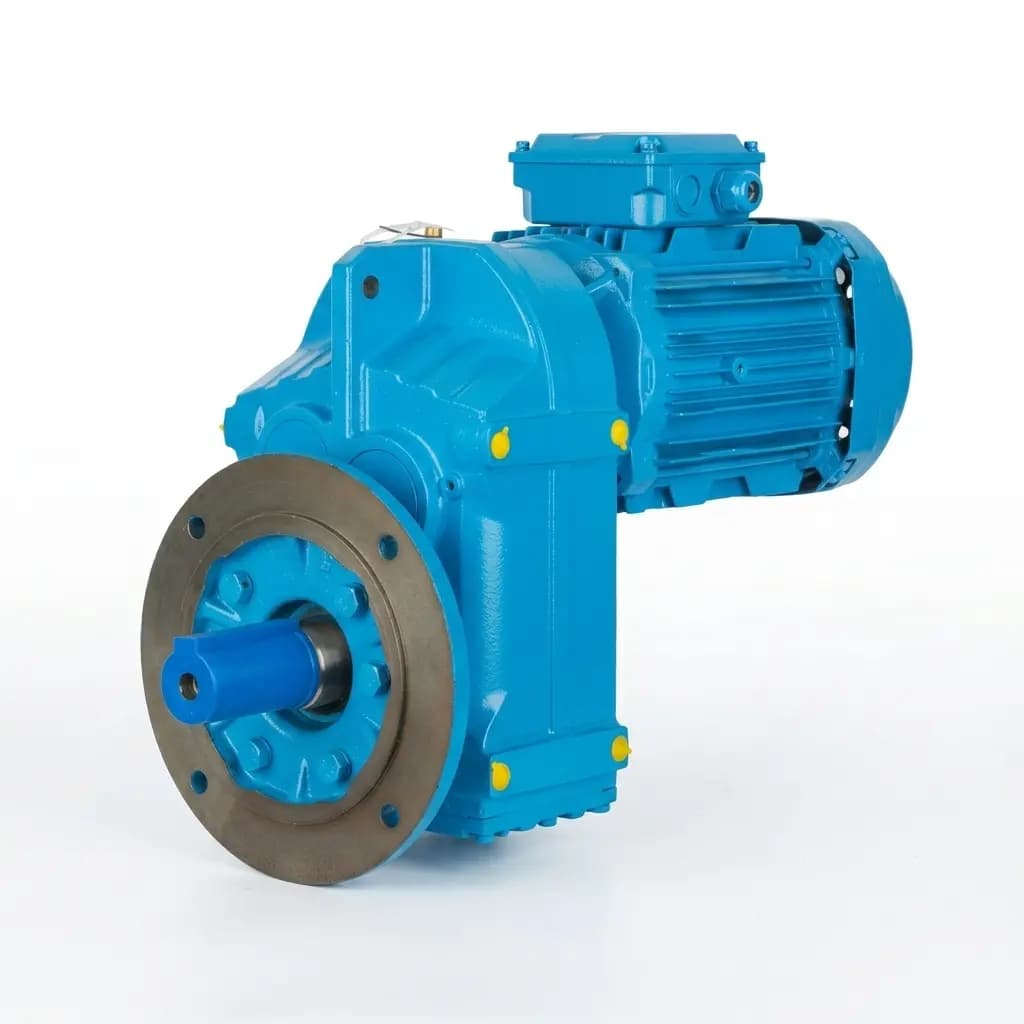
Controlling Backlash in Precision Actuator Gearboxes: DIN/AGMA Standards, Center Distance, and Thermal Drift
How gear quality grades (DIN/AGMA), center distance machining tolerances, and thermal expansion combine to determine actuator positioning accuracy.