
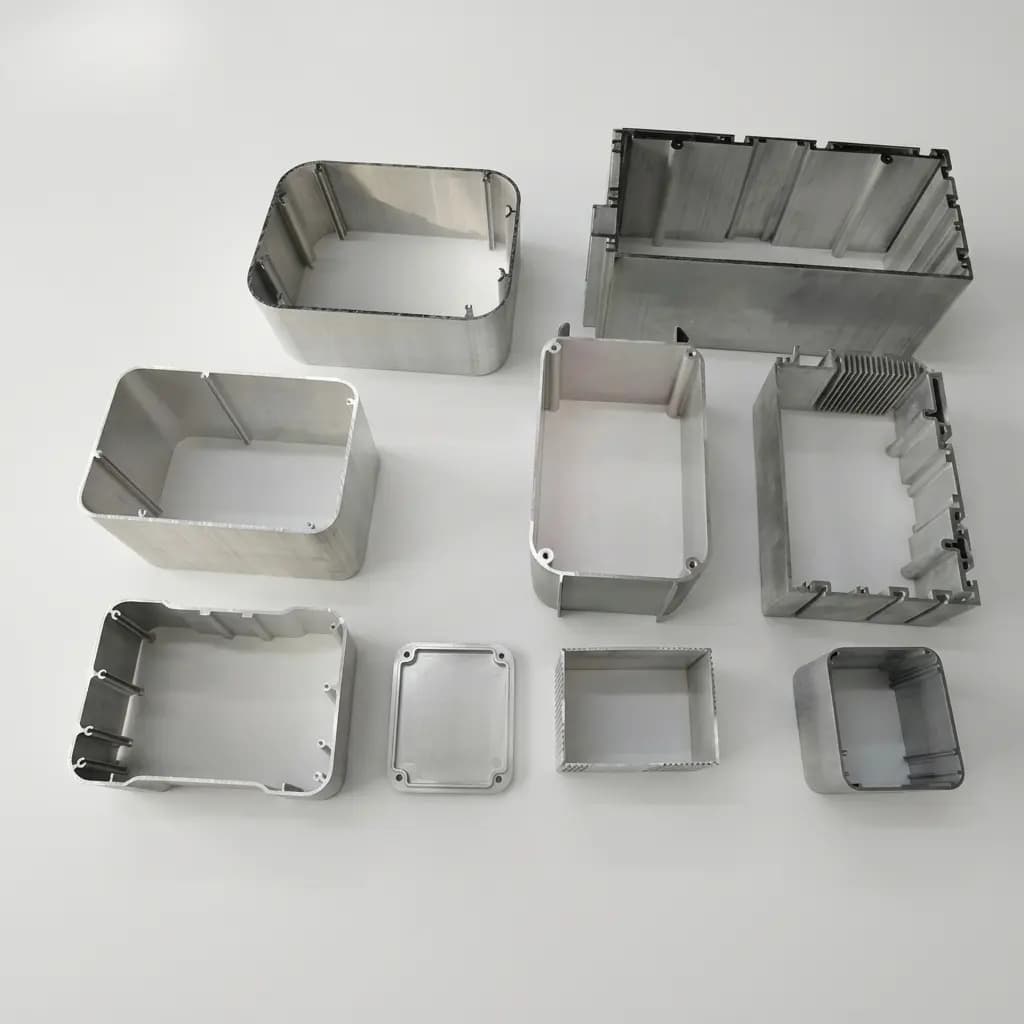
Machining Aerospace Actuator Housings: Titanium vs. Aluminum-Lithium
Compare Titanium and Aluminum-Lithium for aerospace actuator housings. Understand CNC machining challenges, tooling costs, and weight vs. strength tradeoffs for 2026.
Decision-Level Conclusion: For aerospace actuator housings, the choice between Titanium (Ti-6Al-4V) and Aluminum-Lithium (Al-Li) dictates your entire manufacturing cost, lead time, and supply chain complexity. While Titanium offers exceptional thermal stability and structural resilience in mission-critical zones, its poor machinability exponentially drives up CNC spindle time and tooling costs. In contrast, modern third-generation Al-Li alloys provide a superior stiffness-to-weight ratio and are significantly easier to machine. For 2026 lightweighting initiatives, Al-Li is the preferred and most cost-effective choice—provided the actuator's operating temperatures remain strictly below 150°C.
As aerospace, urban air mobility (eVTOL), and advanced robotics sectors push aggressively for extreme lightweighting, engineering and procurement teams are re-evaluating the foundational materials used for actuator enclosures, manifolds, and structural shells. The traditional reliance on high-strength titanium, long considered the undisputed king of aerospace alloys, is being rigorously challenged by third-generation aluminum-lithium alloys (such as 2050 and 2099).
For procurement managers and lead engineers, specifying the wrong material on an actuator housing drawing doesn't just add an incremental raw material cost—it dictates the entire CNC machining strategy, tool life predictability, fixturing requirements, and ultimately the delivery schedule. Understanding the profound machining characteristics and manufacturing economics of these two metals is absolutely critical before releasing an RFQ for series production.
Material Characteristics & Machinability Fundamentals
The initial difference in raw material cost per pound is merely the tip of the iceberg. The true, hidden cost of an actuator housing is buried in the spindle hours required to machine complex internal geometries, hydraulic ports, and seal grooves.
Titanium (Ti-6Al-4V): The High-Cost Benchmark
Titanium (most commonly Ti-6Al-4V Grade 5) is notorious in precision CNC machining for its extraordinarily low thermal conductivity. When cutting standard steel or aluminum, the majority of the heat generated by the cutting action is transferred into the chip and evacuated away from the part. With titanium, the heat concentrates aggressively at the cutting edge.
- Severe Tool Wear: Titanium's high chemical reactivity at elevated temperatures causes "galling"—a process where the material essentially pressure-welds itself to the cutting tool, leading to rapid catastrophic tool failure.
- Speed Limitations: Machining titanium requires notoriously slow surface speeds, rigid machine setups to prevent chatter, high-pressure coolant systems, and highly specialized carbide or ceramic coatings.
- Economic Impact: Total cycle times can easily be 3x to 5x longer than machining an identical geometry in aluminum. This directly multiplies the spindle-hour cost, making the final part exceptionally expensive.
Aluminum-Lithium (Al-Li): The Lightweight Challenger
The metallurgical strategy behind Al-Li is elegant: adding lithium to aluminum reduces the material's overall density while simultaneously increasing its elastic modulus (stiffness). For electro-hydraulic servo actuators, this translates to a physically lighter housing that effectively resists expansion or deformation under intense internal hydraulic pressures.
- Machining Efficiency: Al-Li alloys machine at vastly higher speeds and feed rates compared to titanium. Although slightly more abrasive than conventional 7075 aluminum due to the lithium-bearing precipitates, the difference is negligible when compared to the difficulty of titanium.
- Tooling Requirements: Standard high-performance solid carbide tools and PCD (Polycrystalline Diamond) tooling are highly effective. However, specialized coolant strategies and high-efficiency dust extraction are often required to manage the fine chips and mitigate the specific reactivity of lithium dust.
- Economic Impact: Radically faster cycle times and significantly lower tool consumption make Al-Li highly attractive for high-volume or weight-critical applications, drastically lowering the cost per part.
Technical Comparison Matrix
When evaluating an actuator housing RFQ, use this baseline engineering comparison to understand the mechanical limits and the corresponding machining implications.
| Property / Metric | Aluminum-Lithium (Al-Li) | Titanium (Ti-6Al-4V) | Direct Machining Implication |
|---|---|---|---|
| Density | ~2.55 g/cm³ | ~4.43 g/cm³ | Al-Li provides ~40% weight savings for the final housing. |
| Thermal Limit | Up to ~150°C | Up to ~400°C | Titanium is strictly mandatory for engine-adjacent hot-zones. |
| Machinability Rating | Moderate (Slightly harder than 7075) | Difficult (Requires extreme rigidity) | Al-Li yields substantially faster cycle times and throughput. |
| Tool Wear | Standard abrasive wear, fine chips | Rapid edge degradation, high galling risk | Ti requires frequent, expensive tool changes & 1000+ psi coolant. |
| Surface Finish Control | Excellent, easy to achieve Ra 0.8 | Challenging, requires precise feed control | Ti needs flawless vibration dampening to avoid chatter marks. |
| Residual Stress | Moderate, managed by T8 tempers | High, requires stress relief operations | Thin-walled Ti housings risk warping during final machining passes. |
Toolpath Strategies and Programming Complexities
The geometry of an actuator housing is inherently complex. It typically features deep internal bores for pistons, intricate porting for hydraulic fluid routing, and extremely tight geometric dimensioning and tolerancing (GD&T) for mounting flanges and dynamic seals. How the CNC programmer approaches these features depends entirely on whether they are cutting titanium or aluminum-lithium.
High Efficiency Milling (HEM) in Titanium
When hogging out the internal cavities of a titanium housing, traditional heavy step-over milling will instantly destroy the tool. Instead, programmers must use High Efficiency Milling (HEM) strategies. HEM utilizes a very light radial step-over (often less than 10% of the tool diameter) combined with a deep axial depth of cut. This spreads the wear evenly across the entire flute length of the end mill, rather than concentrating the heat at the bottom corners. However, because the step-over is so small, the tool must take thousands of more passes to clear the same volume of material, drastically extending the cycle time. Furthermore, programming HEM requires advanced CAM software capable of maintaining a constant chip load, as any spike in tool engagement will cause the titanium to work-harden and shatter the cutter.
High-Speed Roughing in Aluminum-Lithium
By contrast, clearing out an Al-Li housing is a high-speed operation. Programmers can utilize aggressive toolpaths that plunge deeply and take massive radial bites, throwing large, thick chips that efficiently carry the heat away from the part. The primary challenge with Al-Li isn't tool breakage, but rather chip evacuation. Because the material is removed so rapidly, the internal cavities of the housing can quickly pack with chips. If chips are re-cut, it damages the critical surface finish required for hydraulic sealing. Therefore, optimizing coolant flow and air blasts to continuously flush the bores is the primary focus during the programming phase.
Fixturing and Thin-Wall Machining
Actuator housings, particularly in aerospace applications, are heavily optimized for weight. This means engineers design them with the thinnest possible wall sections that can still withstand the internal operating pressures. Machining these thin walls without distorting the part is a major manufacturing hurdle.
Distortion Risks in Titanium
Titanium inherently possesses high residual stresses from the forging or billet-rolling process. As the CNC machine removes bulk material to create the housing's internal cavities, these stresses are released, causing the part to warp or "spring" out of tolerance. When cutting thin walls in titanium, the cutting forces are immense. If the wall is not perfectly supported by the fixture, the pressure of the cutting tool will push the wall away, resulting in an undersized bore or an out-of-tolerance port location. To combat this, machinists must design massive, highly rigid custom fixtures that encapsulate the housing, adding significant upfront Non-Recurring Engineering (NRE) costs to the project.
Stability in Al-Li
Aluminum-Lithium alloys, particularly those supplied in T8 tempers (solution heat-treated, cold worked, and artificially aged), offer excellent dimensional stability during machining. The cutting forces required to shear Al-Li are a fraction of those needed for titanium. Consequently, the thin walls of the housing are far less likely to deflect away from the tool. This allows for lighter, less expensive fixturing setups and reduces the need for multiple stress-relief baking cycles between roughing and finishing operations, further accelerating the manufacturing timeline.
Surface Treatments and Environmental Protection
A machined housing is rarely the finished product; it must be protected against the operational environment.
Titanium Passivation: Titanium is naturally highly corrosion-resistant due to its ability to instantly form a protective oxide layer when exposed to oxygen. However, aerospace standards typically require a chemical passivation process to remove any free iron or tramp metals embedded in the surface during the CNC machining process. This is a relatively simple and inexpensive chemical bath.
Al-Li Anodizing: Aluminum-Lithium, while corrosion-resistant, is generally more susceptible to pitting in harsh galvanic environments than titanium. Furthermore, the internal bores of an actuator housing must act as wear surfaces for dynamic piston seals. Therefore, Al-Li housings strictly require hardcoat anodizing (such as MIL-A-8625 Type III). This electrochemical process builds a thick, ceramic-like layer of aluminum oxide on the surface, dramatically increasing the surface hardness and providing exceptional wear and corrosion resistance. Engineers must carefully account for the dimensional growth caused by this anodizing layer when tolerancing the initial CNC drawing.
Procurement & Engineering Checklist
Before finalizing an actuator housing design and submitting it for manufacturing, verify these critical constraints to avoid catastrophic cost overruns and production delays.
- Thermal Validation: Ensure the peak operating environment absolutely does not exceed 150°C if selecting Aluminum-Lithium. If it does, you must revert to Titanium or a high-temp superalloy.
- Structural Rigidity Check: Verify that the specific elastic modulus of the chosen Al-Li alloy (e.g., 2050 vs 2099) meets the strict deformation limits of the hydraulic seals under peak dynamic load.
- Surface Finish Specifications: If specifying Titanium, rigorously review your GD&T tolerances. Over-tolerancing titanium internal bores or blind corners exponentially increases cycle time and tool chatter risk. Specify standard finishes unless a dynamic seal dictates otherwise.
- Coolant & Contamination Rules: For aerospace flight parts, specify on the drawing if certain coolants are banned. For instance, sulfur-based or chlorine-based heavy cutting oils can induce stress corrosion cracking in aerospace titanium and must be avoided.
- Volume vs. Setup Amortization: For low-volume Titanium runs, explicitly anticipate high NRE costs for rigid, vibration-dampening fixturing and specialized multi-axis tool paths. Ensure these costs are factored into your ROI calculation.
- Anodizing Allowances: For Al-Li designs, confirm that all critical bearing surfaces and hydraulic seal grooves have been toleranced to accurately accommodate the precise dimensional growth of Type III Hardcoat Anodizing.
If your team is attempting to transition a legacy heavy-weight design from Titanium to Al-Li, our engineering team can assist with a comprehensive DFM (Design for Manufacturing) review. Submit your CAD models through our contact page for a detailed machining feasibility and cost-reduction assessment.
Frequently Asked Questions
Sources
- National Institutes of Health (NIH) - Advancements in Aluminum-Lithium Alloys for Aerospace: Peer-reviewed studies detailing the third-generation Al-Li damage tolerance and machinability improvements.
- Total Materia Database - Properties of Aluminum-Lithium Alloys: Verified technical data comparing the elastic modulus, yield strength, and density against traditional aluminum and titanium baseline materials.
- Advanced Manufacturing Trends 2026 - Digital Twins and Virtual Commissioning: Industry insights on utilizing kinematic validation and digital twins for optimizing complex actuator housing machining toolpaths.
- Machining Data Handbook - Titanium vs Aluminum Machinability: Baseline empirical data covering feeds, surface speeds, and tool wear characteristics for Ti-6Al-4V across various CNC operations.
- Actuator Machining Engineering Guide - Reducing Cost on Custom Actuator Housings: Practical DFM strategies for CNC machined enclosures focusing on geometry simplification and material selection.
Author

Categories
More Posts
Dimensional Inspection for OEM Actuator Parts: CMM, Profilometers, and First Article Approval
A buyer's guide to First Article Inspection (FAI), CMM measurements, surface roughness (Ra/Rz), and material traceability for outsourced actuator components.
Thermal Dissipation in Actuator Housings: Fin Design, Material Selection, and Emissivity
How to design actuator housings for thermal management: aluminum alloy conductivity, CNC fin constraints, surface emissivity, and DFM rules.
ISO 5211:2026 Actuator Machining and Valve Integration
ISO 5211:2026 affects part-turn actuator machining, valve integration, and RFQ checks. See scope limits, dates, risks, and buyer actions before ordering.