
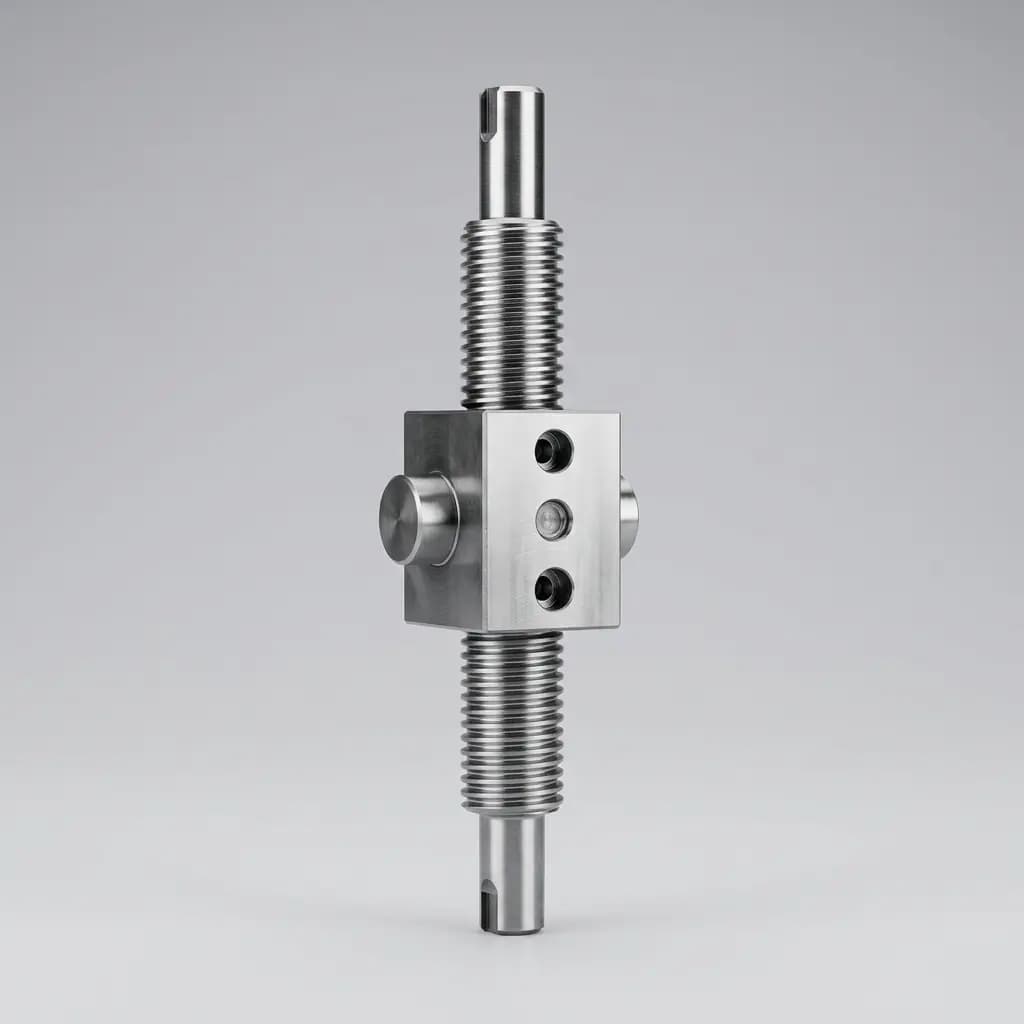
ISO 5211:2026 Actuator Machining and Valve Integration
ISO 5211:2026 affects part-turn actuator machining, valve integration, and RFQ checks. See scope limits, dates, risks, and buyer actions before ordering.
Decision-Level Conclusion: ISO 5211:2026 was published in February 2026 as Edition 4 for industrial valve part-turn actuator attachments. Its practical importance for actuator machining is not that every supplier must invent a new interface overnight, but that RFQs, drawings, and inspection reports now need to reference the current edition when flange dimensions, drive-component dimensions, and interface torque classes affect valve-actuator fit.
The International Organization for Standardization lists ISO 5211:2026 as the published fourth edition for Industrial valves — Part-turn actuator attachments. The public abstract states that the document covers attachment requirements for part-turn actuators, with or without gearboxes, to industrial valves; flange dimensions; driving component dimensions; and reference torque values for interfaces and couplings.
For procurement teams, importers, and engineers, the risk is practical: if a purchase order only says "ISO 5211 mounting" without edition, torque class, drive profile, inspection method, or mating valve drawing, a supplier can quote legacy inventory or a generic interface that still needs a bracket/coupler stack. That creates avoidable backlash, field rework, and mixed-stock confusion during 2026 buying cycles.
Fast RFQ action: add "ISO 5211:2026 interface to be verified against mating valve drawing" to the drawing notes, then attach the valve pad drawing, torque requirement, drive profile, and the FAI report requirements. For new shafts or pinions, cross-check fits against our CNC machining tolerances guide.
What Changed in the 2026 Edition
Public standard summaries do not expose every paid clause, so buyers should avoid treating blog summaries as the standard text. What can be verified from the ISO public record is the 2026 edition, its scope, and the interface categories it governs.
| Verified standard area | What ISO's public abstract confirms | Buyer/Machining Impact |
|---|---|---|
| Attachment scope | Part-turn actuator attachments, with or without gearboxes, to industrial valves. | Confirm the actuator is truly a part-turn valve actuator, not a multi-turn or linear actuator. |
| Flange dimensions | Flange dimensions for attaching part-turn actuators to valves or intermediate supports. | Machine bolt circle diameter, hole pattern, face flatness, and perpendicularity from the current drawing package. |
| Driving components | Driving component dimensions needed to connect actuator and driven components. | Specify square, diagonal square, double-D, round/keyway, or custom drive profile; verify broach or milling data in FAI. |
| Torque references | Reference values for interface and coupling torque. | Match torque class to valve break torque plus safety factor; do not size from flange code alone. |
| Scope boundary | Attachment of the intermediate support to the valve is outside the ISO document's scope. | If a bracket remains in the design, define that bracket on your own controlled drawing and inspection plan. |
Why Direct Mounting Matters for Actuator Machining
Historically, integrating an actuator to a valve often required a fabricated bracket and a machined coupler. This introduced two additional mechanical joints, each a potential source of failure, corrosion, and backlash.
ISO 5211 is valuable because it gives the buyer and supplier a common interface language for direct mounting, where the actuator bolts directly to the valve's ISO pad when the valve and actuator geometry are compatible.
Achieving this requires controlled CNC machining of the Pitch Circle Diameter (PCD) of the bolt holes and precise machining or broaching of the square, double-D, or keyed drive inside the actuator pinion. The standard does not remove the need for engineering judgement: face runout, perpendicularity, drive clearance, coating growth, and actual valve break torque still need to be specified on the supplier drawing.
Flange Dimensions and Torque Capacities
Procurement must match the valve's torque requirements to the correct interface and coupling capacity. Specifying an oversized flange wastes material and envelope space; an undersized interface can overload bolts, couplings, or drive flats.
The table below is an engineering planning reference for common ISO 5211 F-code patterns. Treat it as an RFQ checklist, not a substitute for the paid standard or the actuator manufacturer's certified data.
| F-Code | Bolt Circle Diameter (PCD) | Bolt Thread | Max Torque (Nm) | Typical Application |
|---|---|---|---|---|
| F03 | 36 mm | M5 | 32 Nm | 1/2" - 1" Ball Valves |
| F04 | 42 mm | M5 | 63 Nm | 1.5" Ball Valves |
| F05 | 50 mm | M6 | 125 Nm | 2" Ball Valves, Small Butterfly |
| F07 | 70 mm | M8 | 250 Nm | 3" - 4" Butterfly Valves |
| F10 | 102 mm | M10 | 500 Nm | 6" - 8" Butterfly Valves |
| F12 | 125 mm | M12 | 1000 Nm | 10" - 12" Heavy Duty Valves |
For tolerance-sensitive programs, the drawing should also call out inspection method. True position of bolt holes and perpendicularity of the mounting face generally need CMM or fixture-based verification, while simple thread confirmation can use calibrated plug gauges. Our dimensional inspection guide gives the buyer-side instrument matrix.
Risks, Limits, and Evidence Gaps
Understanding the boundaries of ISO 5211:2026 is critical to prevent misapplication.
Risk Matrix & Applicability Limits
| Risk Factor | Trigger Condition | Impact Severity | Mitigation / Boundary Rule |
|---|---|---|---|
| Supply Chain Mixing | PO, drawing, and inspection plan do not state the ISO edition. | High: Mixed legacy and current drawing requirements. | State ISO 5211:2026 on new drawings and quarantine old stock until interface dimensions are checked. |
| Motion Type Limit | Applying the standard to multi-turn or linear valves. | Critical: Wrong standard family and wrong load path. | Strict Boundary: Use ISO 5210 or the relevant actuator/valve standard for multi-turn or linear thrust applications. |
| Intermediate Support Gap | Bracket or adapter remains between actuator and valve. | High: ISO public scope does not govern the support-to-valve attachment. | Control the bracket on a separate drawing with its own material, flatness, bolt grade, coating, and inspection notes. |
| Torque Misread | Selecting only by F-code without valve break torque, media, temperature, or duty cycle. | High: Coupling or drive flats can round under real service loads. | Size from valve torque data plus safety factor, then verify the coupling and drive component dimensions. |
| EU Adoption Ambiguity | Exporting to Europe with only a generic "ISO 5211" note. | Medium: Customer or notified-body review may require a specific EN/DIN/BS adoption. | Confirm the required national adoption and edition before PO release. |
Evidence Gaps: ISO standardizes interface categories and reference torque values, but it does not guarantee that a specific valve body, actuator housing, drive material, coating stack, or bracket can withstand that torque under high temperatures, corrosive media, shock loading, or high cycle counts. Buyers must verify manufacturer operational limits independently.
Who Should Act Now (Action Checklist)
For companies importing, specifying, or machining these components, immediate action prevents 2026 supply chain confusion. The goal is to turn a standard reference into controlled drawings, verified parts, and supplier evidence.
Critical Transition Timeline
| Phase | Date | Buyer / Supplier Action Required |
|---|---|---|
| Global Publication | February 2026 | ISO lists ISO 5211:2026 as published Edition 4. Engineering teams should update drawing notes for new releases. |
| Buyer Drawing Update | Q2 2026 | Add edition, F-code, drive profile, torque requirement, material/coating assumptions, and inspection method. |
| Supplier Evidence Check | Q2-Q3 2026 | Ask suppliers to identify the standard edition used for quotes and attach FAI data for interface-critical dimensions. |
| Inventory Audit | Q3-Q4 2026 | Separate old-stock actuators, adapters, and valve pads until interface dimensions and torque class are verified. |
For Engineering Teams
- Update CAD Templates: Reference "ISO 5211:2026" on all new mounting pad drawings.
- Review GD&T Callouts: Define bolt-hole true position, mounting-face perpendicularity, drive-profile clearance, and coating allowance on the controlled drawing.
- Evaluate BOMs: Replace brackets and couplers with direct-mount configurations where the valve pad, actuator drive, and service torque allow it.
- Control Shaft Fits: Use the actuator shaft tolerance guide to avoid over-tightening non-critical fits.
For Procurement & Quality Teams
- Supplier Verification: Contact CNC suppliers and confirm which ISO 5211 edition and national adoption they quote against.
- Update Inspections: Modify FAI templates to require actual measurements of PCD, hole true position, mounting face, and drive profile where those features affect assembly.
- Inventory Policy: Institute a "no-mix" policy for high-cycle assemblies to prevent pairing legacy and new-standard interfaces.
- RFQ Routing: Send the actuator drawing, valve pad drawing, torque data, annual volume, and inspection level through the contact/RFQ page before asking for price.
Frequently Asked Questions
Sources
- International Organization for Standardization (ISO) - ISO 5211:2026 Industrial valves — Part-turn actuator attachments (published February 2026, Edition 4): https://www.iso.org/standard/89904.html
- Actuator Machining - buyer-side FAI and measurement controls for outsourced actuator parts: Dimensional Inspection for OEM Actuator Parts
- Actuator Machining - machining tolerance selection for actuator shafts and drive-critical features: CNC Machining Tolerances Guide for Actuator Shafts
Author

Categories
More Posts
2026 CNC Actuator Tariffs: HS Codes & Sourcing Strategy
Actuator Machining guide to 2026 Section 232/301 tariff exposure, HS code checks, and sourcing actions for imported CNC actuator parts. Use it before RFQ.
CNC Machining Tolerances Guide for Actuator Shafts: ISO 286 Fits, Cost Multipliers, and GD&T
Engineering reference for selecting ISO 286 tolerances, specifying GD&T callouts, and managing CNC cost multipliers on linear and rotary actuator shafts.
Controlling Backlash in Precision Actuator Gearboxes: DIN/AGMA Standards, Center Distance, and Thermal Drift
How gear quality grades (DIN/AGMA), center distance machining tolerances, and thermal expansion combine to determine actuator positioning accuracy.