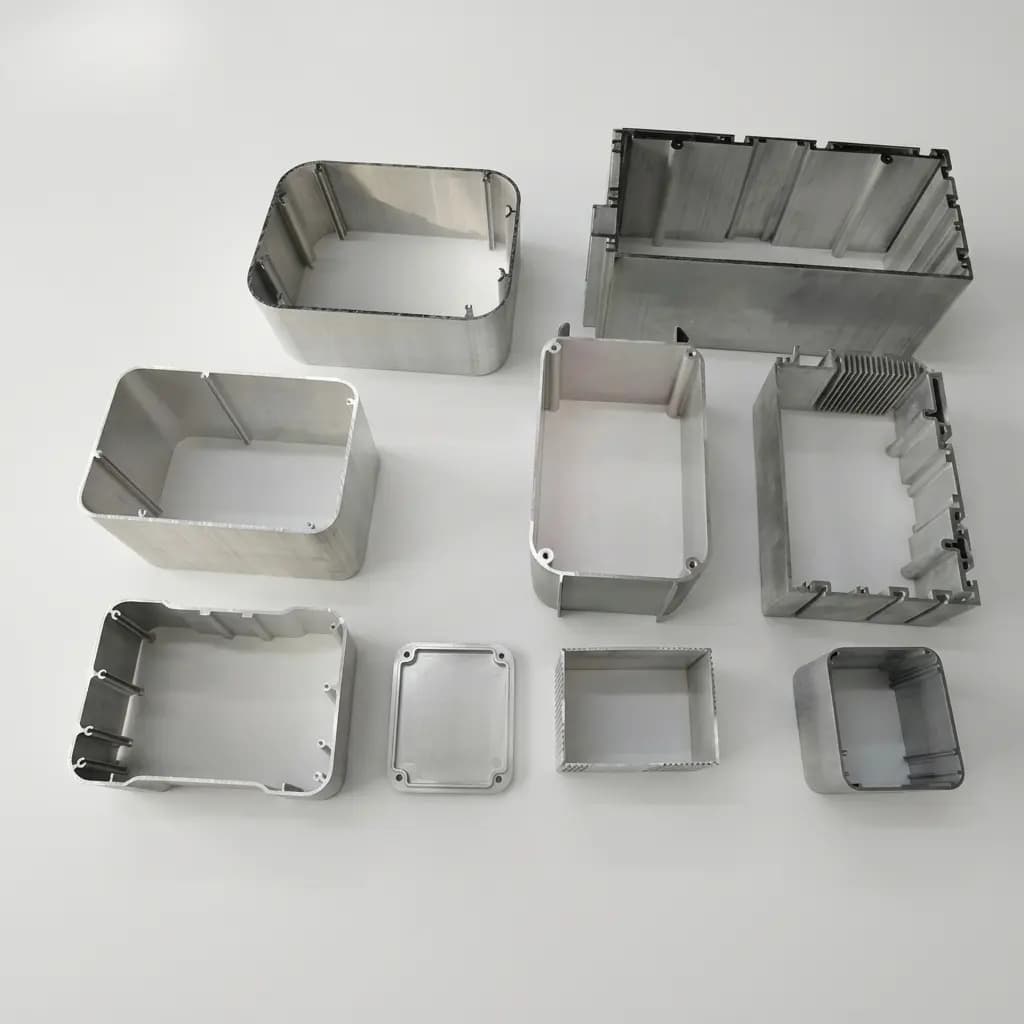
Sourcing Actuator Components for Liquid Hydrogen (LH2): Machining Tolerances & Embrittlement
A procurement guide to LH2 actuator machining tolerances, thermal contraction, surface finish, and embrittlement controls for qualifying cryogenic CNC suppliers.
For procurement teams, mechanical engineers, and supply chain managers supporting hydrogen infrastructure, controlling Liquid Hydrogen (LH2) requires highly specialized fluid control systems. Whether the project is for heavy-duty fuel cell electric vehicles (FCEVs), aerospace propulsion systems, or bulk transportation networks, the actuator package sits close to the valve, seal, shaft, and pressure-boundary decisions that determine whether the system remains leak-tight.
However, sourcing CNC machined actuator components for LH2 applications is profoundly different from traditional industrial or even standard aerospace procurement. Liquid hydrogen sits at an extreme cryogenic temperature of -253°C (20 Kelvin). At this temperature, the fundamental rules of physics, metallurgy, and traditional Coordinate Measuring Machine (CMM) inspection are completely upended.
If your machine shop treats an LH2 actuator housing the same way it treats a standard water or natural gas valve, the assembly may bind, leak, or lose fracture margin because of thermal contraction, residual stress, and hydrogen embrittlement.
This guide is a procurement and engineering reference for actuator housing machining, valve and fluid-control actuator parts, and cryogenic supplier qualification.
Scope, Assumptions, and Procurement Limits
Published and reviewed on July 24, 2026, this article applies to CNC-machined actuator housings, stems, shafts, seats, and nearby valve-interface components that may see LH2 service near -253°C. It is intended for OEM sourcing, DFM review, and supplier screening, not as a substitute for a project-specific pressure design code, hydrogen compatibility test plan, qualified material specification, or customer flow-down requirement.
Use the values below as procurement screening ranges. Final dimensions, leak rates, heat treatment, nondestructive examination, and acceptance criteria must be controlled by the drawing package, operating pressure, duty cycle, media exposure, governing standard, and customer qualification plan.
1. The Physics of Liquid Hydrogen: Why -253°C Changes Everything
To understand the machining requirements, we must first understand the adversary: Liquid Hydrogen.
Hydrogen is the smallest element in the universe. In its gaseous state, it can diffuse through microscopic pores in solid metals. To liquefy it for transport and storage, it must be cooled down to -253°C.
This creates two distinct, simultaneous engineering nightmares for the actuator component:
- Extreme Thermal Contraction: Metals shrink as they cool. When dropping from a typical machine shop ambient temperature of 20°C down to -253°C, the dimensional changes are massive. A precision-machined bore that perfectly fits a shaft on the shop floor will clamp down and bind completely in the field.
- Hydrogen Embrittlement (HE): Hydrogen atoms are so small they can enter the crystal lattice of the metal itself. They migrate toward areas of high residual stress. Once inside, they combine to form hydrogen gas molecules, creating immense internal pressure that tears the metal apart from the inside out, turning ductile steel into glass.
For the OEM procurement team, this means that every single CNC machining operation—from rough milling the housing block to final super-finishing of the actuator shaft—must be explicitly designed to mitigate these two risks.
2. Material Selection: The Foundation of LH2 Machining
You cannot machine your way out of a bad material choice. Procurement teams must strictly enforce material specifications. Standard industrial alloys will fail. For broader non-LH2 material tradeoffs, compare this guidance with the site's actuator machining materials guide before locking RFQ requirements.
Approved Materials for LH2 Actuators
- 316L Stainless Steel: The workhorse of the hydrogen industry. The "L" stands for low carbon, which prevents carbide precipitation during welding. Crucially, 316L has high nickel content, which stabilizes the austenitic phase of the steel, preventing it from becoming brittle at -253°C and offering good resistance to hydrogen embrittlement.
- 316LN Stainless Steel: Nitrogen-strengthened 316L. It offers higher yield strength than standard 316L while maintaining excellent cryogenic toughness. It is notoriously difficult to machine due to rapid work-hardening.
- Inconel 718 / Monel K-500: Used for high-stress actuator stems and shafts. These nickel-based superalloys offer incredible strength at cryogenic temperatures and are highly immune to hydrogen embrittlement, but they destroy standard carbide cutting tools rapidly.
- Aluminum 6061-T6 / 7075-T6: Often used for the outer housings of actuators to save weight in aerospace applications. Aluminum does not suffer from hydrogen embrittlement and retains ductility at -253°C, but its thermal contraction rate is drastically different from the stainless steel internal components.
Materials to Strictly Avoid
- Carbon Steels (1018, 4140): Become completely brittle and will shatter on impact at cryogenic temperatures.
- Standard 304 Stainless: Can undergo a phase transformation to martensite when cooled and stressed, making it brittle and susceptible to hydrogen embrittlement.
- Titanium Alloys: While strong and light, many titanium alloys form titanium hydrides when exposed to hydrogen, leading to severe embrittlement. Only very specific, highly controlled titanium grades can be used, and even then, with extreme caution.
Comparative Alloy Table for LH2 Actuator Procurement
| Material Grade | Cryogenic Toughness (-253°C) | Hydrogen Embrittlement Resistance | Machinability Rating (1=Hard, 10=Easy) | Typical Actuator Application | Procurement Cost Premium |
|---|---|---|---|---|---|
| 316L SS | Excellent | High | 5/10 | Main Valve/Actuator Housings | Base Cost |
| 316LN SS | Excellent | High | 4/10 | High-Pressure Housings | +20% to +40% |
| Inconel 718 | Exceptional | Exceptional | 2/10 | Actuator Stems, Drive Shafts | +300% to +500% |
| Alum 6061-T6 | Good | Excellent (Immune) | 8/10 | External Pneumatic Cylinders | -20% (Material only) |
| 304 SS | Poor (Phase Change) | Low | 6/10 | DO NOT USE | N/A |
| Titanium Ti-6Al-4V | Fair | Very Low (Hydrides) | 3/10 | DO NOT USE (Without Coating) | N/A |
3. Designing and Machining for Thermal Contraction
The biggest disconnect between OEM engineering and the CNC machine shop occurs during the dimensional translation.
A 316L stainless steel actuator housing will shrink by roughly 0.3% when cooled from room temperature to LH2 temperature. This sounds small until you apply it to tight-tolerance fits.
The Shrinkage Math
If you have an actuator piston bore designed to be exactly 100.000 mm at operating temperature (-253°C), the machine shop cannot simply machine a 100.000 mm hole.
- Shrinkage factor: ~0.003 mm per mm.
- Total shrinkage: 100 mm * 0.003 = 0.300 mm.
- Machining Target: The shop must actually machine the bore to 100.300 mm at room temperature (20°C).
If the OEM drawing does not explicitly state whether the dimensions apply at ambient or operating temperature, disaster is guaranteed.
Multi-Material Assemblies
The complexity multiplies exponentially when dealing with multi-material assemblies. If an Aluminum 6061 piston operates inside a 316L Stainless Steel bore, the shop must account for the fact that Aluminum shrinks at a different, faster rate than Stainless Steel. If clearances are machined too tight at room temperature, the aluminum will shrink away from the bore at -253°C, causing total seal failure and massive LH2 leakage.
For hydrogen infrastructure packages where the actuator connects directly to valve trim, pressure boundary, or fuel-system hardware, start supplier selection from energy infrastructure actuator parts rather than from a commodity machining scorecard.
Cryogenic "Seasoning" (Thermal Cycling)
Residual stresses from the raw material forging or the rough machining process will cause the part to warp as it cools. For ultra-high-precision LH2 actuators, top-tier machine shops utilize "Cryogenic Seasoning."
- Rough Machining: The part is milled down, leaving 0.5 mm to 1.0 mm of extra material.
- Deep Freeze: The part is submerged in Liquid Nitrogen (-196°C) for several hours, then allowed to warm back to room temperature. This is repeated 2-3 times.
- Stress Relief: This violent thermal cycling forces the part to release its internal residual stresses, warping it into its "relaxed" state.
- Finish Machining: The shop then performs the final precision cuts on the relaxed metal, guaranteeing it will remain dimensionally stable when it finally sees LH2 in the field.
4. Surface Integrity: The Invisible Battleground
While dimensional tolerances deal with thermal contraction, surface integrity deals directly with preventing Hydrogen Embrittlement and leakage. This is where procurement teams must heavily audit their CNC suppliers. When the RFQ includes bores, shaft journals, or seal lands, use an actuator body CNC machining review to separate ordinary dimensional capability from surface-integrity controls.
The Danger of Work-Hardening
Austenitic stainless steels (like 316L) and superalloys (like Inconel) are notorious for work-hardening. If a cutting tool rubs against the metal instead of slicing cleanly through it, the heat and friction cause the surface layer of the metal to become incredibly hard and loaded with residual tensile stress.
Why does this matter for LH2? Hydrogen atoms are drawn to areas of high tensile stress like a magnet. If a machine shop uses a slightly dull endmill to bore the inside of an actuator housing, they will leave a microscopic layer of highly stressed, work-hardened metal behind. When exposed to LH2, hydrogen diffuses into this stressed layer, combining into gas molecules and literally blasting microscopic cracks into the surface. The housing will eventually rupture under pressure.
Machining Best Practices for LH2
To prevent work-hardening and residual stress, the CNC machining process must be radically altered:
- Tool Sharpness Mandates: Tools must be replaced long before they show visible wear. A "tool life management" system within the machine's CNC controller is mandatory.
- Climb Milling Only: Conventional milling causes rubbing before cutting. Climb milling ensures the tool enters the material cleanly.
- Positive Rake Angles: Cutting tools must have high positive rake angles to shear the metal sharply, reducing cutting forces and heat generation.
- High-Pressure Through-Coolant: Flooding the cutting zone with high-pressure coolant (1,000 PSI+) is required to instantly evacuate heat and chips, preventing thermal damage to the machined surface.
5. Overcoming the Sealing Challenge: Superfinishing and Burnishing
At ambient temperatures, a standard O-ring can easily conform to a moderately rough machined surface (e.g., Ra 0.8 µm or 32 µin) to create a perfect seal.
At -253°C, everything changes. Polymeric seals (PTFE, Kel-F, etc.) lose their elasticity and become virtually as hard as the metal they are sealing against. Combine this with the fact that Hydrogen is the smallest molecule in existence, and you have a recipe for constant leakage.
The LH2 Surface Finish Requirement
For dynamic seals on actuator shafts, or static metal-to-metal seals on actuator housings, traditional turning or milling is not enough. The microscopic "peaks and valleys" left by a lathe tool form perfect leak paths for hydrogen gas.
Required Finishes:
- Dynamic Shaft Seals: Ra 0.1 to 0.2 µm (4 to 8 µin).
- Static Metal-to-Metal Seats: Ra 0.2 to 0.4 µm (8 to 16 µin).
Machining Techniques to Achieve LH2 Finishes
To achieve these numbers economically, top-tier shops move beyond traditional turning:
- Roller Burnishing: Instead of cutting metal away, a hardened roller is pressed against the machined surface under high pressure. This crushes the microscopic "peaks" down into the "valleys," creating an ultra-smooth, mirror-like finish. Bonus: Burnishing induces compressive stress in the surface layer, which actively repels hydrogen atoms and prevents embrittlement.
- Cylindrical Grinding and Lapping: For extreme tolerances and finishes on Inconel shafts, parts must be moved from the lathe to a dedicated cylindrical grinder, followed by diamond lapping.
6. Procurement & Engineering Checklist for LH2 Actuator Sourcing
If you are a buyer or engineer transitioning into the hydrogen space, you cannot use your legacy supplier scorecard. Use this checklist to audit potential CNC machining partners for LH2 components:
- Material Traceability: Does the shop maintain 100% EN 10204 3.1 certification traceability, ensuring no counterfeit or non-compliant stainless steel enters the workflow?
- Thermal Contraction Competence: Does their engineering team explicitly ask about operating temperatures vs. inspection temperatures before accepting the Purchase Order?
- Cryogenic Seasoning Capability: Can they perform deep thermal cycling (using Liquid Nitrogen) between rough and finish machining operations to relieve stress?
- Tool Life Management Systems: Do their CNC machines have automated tool-monitoring software to detect wear and prevent work-hardening the surface?
- Advanced Surface Finishing: Do they have in-house roller burnishing or cylindrical grinding capabilities to achieve Ra 0.1 µm finishes?
- Helium Leak Testing: While not strictly a machining operation, do they have the capability to perform (or closely manage) Helium mass spectrometer leak testing before shipping the finished housing?
If several items above are unknown during quoting, run a supplier capability screen before awarding the RFQ; the actuator component supplier qualification guide covers the broader procurement workflow.
7. Frequently Asked Questions (FAQ)
Q: Can we use hard-anodized aluminum for LH2 actuator bodies to save weight? While aluminum does not suffer from hydrogen embrittlement, hard anodizing creates a porous aluminum oxide layer. In extreme cryogenic environments, differential thermal contraction between the base aluminum and the hard anodic coating can cause the coating to micro-crack and flake off, introducing particulate contamination into the hydrogen stream. Bare aluminum or specialized plating (like Electroless Nickel) is often preferred.
Q: Why is Helium used for leak testing instead of Hydrogen? Helium is inert and safe to handle, unlike Hydrogen which is highly flammable. Because the Helium atom is only slightly larger than a Hydrogen molecule (and behaves similarly as a gas), a component that passes a strict Helium mass spectrometer leak test is generally guaranteed to be leak-tight for Liquid Hydrogen.
Q: Does cryogenic machining (using liquid nitrogen as a coolant) help prevent hydrogen embrittlement? Yes. Using Liquid Nitrogen (LN2) as a cutting fluid instead of traditional oil/water emulsions keeps the cutting zone extremely cold. This drastically reduces heat accumulation, minimizing work-hardening and preventing the creation of the residual tensile stresses that invite hydrogen embrittlement.
References and Source Notes
The engineering guidance above is grounded in public hydrogen infrastructure and materials literature, then translated into actuator machining procurement controls.
- U.S. Department of Energy: Hydrogen Storage — used for LH2 storage context and hydrogen infrastructure framing.
- U.S. Department of Energy: Hydrogen Pipelines — used for hydrogen transport, leakage, and compatibility context near fluid-control hardware.
- OSTI hydrogen/materials record — used as supporting literature for hydrogen compatibility and embrittlement risk in engineered materials.
8. Conclusion and Next Steps
The shift toward the hydrogen economy represents a massive opportunity, but it demands an absolute zero-tolerance approach to manufacturing defects. The traditional "race to the bottom" on unit price will result in catastrophic field failures when dealing with Liquid Hydrogen at -253°C.
Procurement teams must elevate their sourcing strategies. You are no longer just buying a machined shape; you are buying metallurgical integrity, precision thermal compensation, and guaranteed leak-tight performance.
If your current supply chain lacks the deep engineering expertise required to machine 316L, Inconel, and other specialized alloys for extreme cryogenic environments, it is time to upgrade.
Need to secure your LH2 supply chain? Contact our engineering team today to discuss your specific actuator housing drawings. We provide comprehensive DFM (Design for Manufacturing) reviews focused on cryogenic thermal contraction, surface integrity, and embrittlement mitigation.
Author

More Posts
How ABB's $5.5B Acquisition of Rotork Reshapes Actuator Machining Procurement
ABB announces a $5.5B acquisition of Rotork. Learn how this reshapes actuator machining procurement, supplier concentration, and precision OEM manufacturing standards.
Thermal Dissipation in Actuator Housings: Fin Design, Material Selection, and Emissivity
How to design actuator housings for thermal management: aluminum alloy conductivity, CNC fin constraints, surface emissivity, and DFM rules.
CNC Machining Smart Actuator Housings: DFM Strategies for IoT Sensor Integration
CNC machining smart actuator housings guide for IoT sensor pockets, EMI shielding, IP sealing, tolerances, inspection, and RFQ planning. Request DFM input.