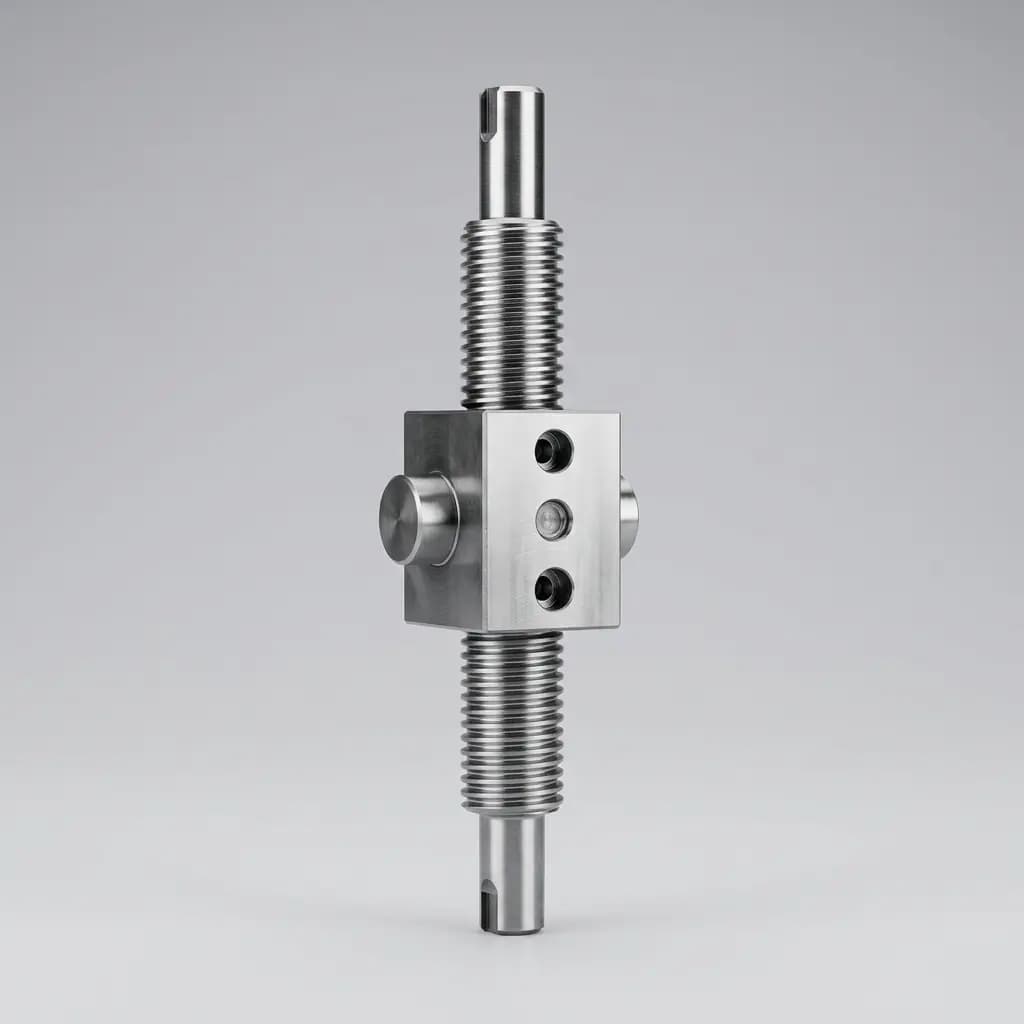
Lead-Free Brass in Actuator Machining: Transitioning Ahead of RoHS 2026 Deadlines
Lead-free brass actuator machining guide covering RoHS 2026 deadlines, alloy choices, CNC cost impacts, supplier questions, and RFQ steps for OEM buyers.
The global landscape of actuator manufacturing is facing a profound material shift. For decades, C36000 Free-Cutting Brass has been the undisputed king of pneumatic, hydraulic, and electromechanical actuator components. Its 3% lead (Pb) content acts as an internal lubricant, allowing for microscopic chip breaking, blistering CNC spindle speeds, and pristine surface finishes with minimal tool wear.
However, the regulatory window for leaded brass is closing. Under the EU's Restriction of Hazardous Substances (RoHS) Directive, Exemption 6(c)—which permits up to 4% lead by weight in copper alloys—is facing its final sunset. With recommendations pointing to an expiration date of July 21, 2026 for major equipment categories, procurement teams and design engineers can no longer afford a wait-and-see approach.
Transitioning a mature actuator product line to lead-free brass (Eco-Brass) is not a simple drawing update. It alters supply chain economics, CNC cycle times, tool wear rates, and thermal management strategies during machining. This guide breaks down the engineering and procurement implications of the 2026 RoHS transition, providing a clear roadmap for sourcing compliant actuator housings, stems, and fittings without sacrificing precision or margins.
1. Why Actuator Machining Relies heavily on Leaded Brass
Actuators—particularly pneumatic and fluid control valves—rely heavily on brass for its natural corrosion resistance, low magnetic permeability, and spark-free properties. But the real magic of C36000 lies in its machinability.
Lead does not dissolve in copper-zinc alloys; it pools at the grain boundaries. When a CNC cutting tool shears the metal, these lead pools cause the chips to fracture cleanly and rapidly. This "free-cutting" behavior means:
- Higher Spindle Speeds: Up to 30% faster material removal rates compared to low-lead alloys.
- Lower Heat Generation: Heat is carried away by the fractured chips, keeping the workpiece dimensionally stable—critical for maintaining tight
h6org6sliding fits on actuator shafts. - Extended Tool Life: The lead lubricates the cutting edge, reducing friction and tool degradation.
Removing lead forces CNC machinists to deal with stringy, continuous chips that wrap around tooling, cause surface gouging, and generate immense heat. For procurement teams, this translates directly to higher scrap rates and inflated piece-price quotes if the transition is mismanaged.
2. Lead-Free Brass Alternatives: The 2026 Material Landscape
To maintain compliance while preserving actuator functionality, metallurgists have developed several low-lead or lead-free alternatives (typically defined as containing less than 0.1% or 0.25% Pb). The most viable replacements use Bismuth (Bi) or Silicon (Si) to mimic the chip-breaking properties of lead.
Here is a structured comparison of the leading alternatives for actuator components:
| Alloy Grade | Common Name | Primary Additive | Machinability Index* | Tensile Strength (MPa) | Best Used For (Actuator Applications) | Cost Impact vs C36000 |
|---|---|---|---|---|---|---|
| C36000 | Free-Cutting Brass | Lead (2.5-3.7%) | 100% (Baseline) | 338 | Legacy housings, stems, and fittings. | Baseline |
| C69300 | Eco-Brass | Silicon & Phosphorus | 80% | 550+ | High-pressure hydraulic housings, stems requiring high strength. | +25% to +40% |
| C89835 | Bismuth Brass | Bismuth (1.7-2.7%) | 85% | 275 | Low-pressure pneumatic fittings, general turned parts. | +15% to +30% |
| C46400 | Naval Brass | Tin (0.5-1.0%) | 30% | 380 | Subsea or marine actuator enclosures (requires high corrosion resistance). | +50% to +70% |
| C27450 | Low-Lead Brass | Zinc (High %) | 70% | 345 | Cost-sensitive threaded connectors and minor hardware. | +10% to +20% |
| C87850 | Eco-Bronze | Silicon | 70% | 450 | Heavy-duty rotary actuator gears and high-wear components. | +40% to +60% |
*Machinability Index is relative to C36000 at 100%. A lower percentage means slower cutting speeds and faster tool wear.
3. Engineering Impact: Tooling, Heat, and Tolerances
When an OEM updates a drawing from Material: C36000 to Material: C69300 (Lead-Free), the CNC machining process must be completely overhauled.
Chip Management and Surface Finish
Without lead, chips tend to be continuous. Machining Eco-Brass requires specialized carbide inserts with aggressive chip-breaker geometries. High-pressure coolant systems (1000+ PSI) become mandatory to snap the chips and evacuate them from deep blind holes, typical in actuator valve bodies.
Thermal Distortion
Because the chips do not break easily, friction increases. The silicon in Eco-Brass also acts as an abrasive, dulling tools faster. This friction pushes heat back into the actuator part rather than carrying it away in the chip. For precision actuator shafts requiring ISO h6 tolerances, this thermal expansion is dangerous. If the machinist measures a warm part and hits the nominal dimension, the part will shrink undersized as it cools, potentially failing inspection or causing bearing slop in the field.
To compensate, CNC programmers must implement roughing passes, allow the part to cool, and then execute a light, high-speed finishing pass. This multi-stage strategy inherently increases cycle time and piece cost.
4. The 2026 RoHS Transition Checklist for Procurement
Waiting until Q1 2026 to update drawings and secure supply chains will inevitably lead to massive cost spikes, long lead times, and potential stockouts as the entire global supply chain rushes to transition simultaneously.
Procurement and engineering teams should implement the following checklist immediately:
- Audit the Bill of Materials (BOM): Identify all brass actuator components currently specifying C36000 or generic "Brass" without explicit alloy callouts.
- Determine the Exemption Reliance: Verify if the parts are currently imported/sold in the EU under RoHS Exemption 6(c). Note that even if selling to the US, global harmonization often dictates adopting RoHS standards to simplify inventory.
- Consult Engineering for Material Substitution: Do not unilaterally substitute materials. Have engineering evaluate C69300 (for strength and high pressure) vs. C89835 (for cost-efficiency on low-stress parts).
- Request Lead-Free Samples Now: Lead-free brass behaves differently. You must perform First Article Inspection (FAI) and functional testing to ensure the new alloy does not gall against mating stainless steel components.
- Budget for a 20-40% Cost Increase: Adjust future cost models to reflect higher raw material costs and increased machining cycle times.
- Evaluate Surface Treatments: Lead-free brasses can respond differently to electroless nickel plating or passivation. Validate the coating adhesion in a lab environment.
- Partner with Specialized Machining Vendors: Ensure your CNC partner has experience with high-pressure coolant and silicon-brass tooling. Vendors using legacy equipment will struggle with the stringy chips, resulting in late deliveries and poor surface finishes.
5. Overcoming the Cost Gap: DFM Strategies
While you cannot eliminate the material premium of lead-free brass, you can mitigate the overall cost impact through Design for Manufacturability (DFM):
- Loosen Non-Critical Tolerances: If a dimension does not affect the actuator's function or sealing, open the tolerance. Moving from an
H7to anH9bore on a non-mating surface can save 15% in cycle time by eliminating a reaming operation. - Standardize Thread Depths: Deep threaded blind holes are notoriously difficult in lead-free brass due to chip packing and tap breakage. Design thread depths to a maximum of 2x the thread diameter, or use thread milling instead of tapping.
- Re-evaluate Material Choices: In some low-stress applications, it might be more cost-effective to abandon brass entirely and move to high-strength engineering plastics (like PEEK or POM) or switch to 6061-T6 Aluminum if corrosion resistance can be managed via hard anodizing.
6. Buyer Q&A: Navigating the Lead-Free Brass Transition
Q: Can we just use stainless steel (like 304 or 316) instead of moving to Eco-Brass for our actuator housings?
A: Yes, but be prepared for a massive cycle time penalty. While 304/316 stainless is inherently lead-free and offers superior corrosion resistance, its machinability index is around 40-50% compared to C36000's 100%. Eco-Brass (C69300) machines at about 80%. If your actuator requires complex internal porting or threading, stainless steel will drastically increase tool wear and cycle time, potentially doubling the housing cost compared to a lead-free brass alternative. This applies directly to your application boundaries and specifications.
Q: What are the main failure risks when substituting C36000 with C69300 in pneumatic actuators?
A: The two biggest failure risks are galling and dimensional instability due to thermal expansion. Silicon-based eco-brasses are harder and lack the natural lubricity of leaded brass. When mating with stainless steel spools or stems, they are more prone to galling under high-cycle conditions. Additionally, as eco-brass retains more heat during machining, improper cooling can lead to parts shrinking out-of-tolerance after they are removed from the CNC chuck, causing premature seal failures or binding.
Q: How do we communicate the new specifications to our current CNC suppliers? What should we ask them?
A: Do not just send a drawing with a new material callout. You need to ask your suppliers specific qualification questions:
- “Do your CNC lathes feature high-pressure coolant (1000+ PSI) to break the continuous chips of C69300?”
- “Are you using specialized positive-rake carbide inserts for silicon brass?”
- “Can you provide an FAI (First Article Inspection) that explicitly measures surface roughness (Ra) in the internal bores to ensure seal integrity?” If they answer "no" or seem unsure, they will likely struggle with the transition, leading to delayed deliveries and rejected lots.
Q: Will the 2026 RoHS Exemption 6(c) expiry apply to our actuators if we only sell to the North American market?
A: Legally, the EU RoHS directive only applies to products placed on the European market. However, maintaining two separate supply chains (one leaded for NA, one lead-free for EU) is a logistical nightmare that doubles your inventory carrying costs and SKU management. Furthermore, US state-level regulations (like California Prop 65) and global OEMs are increasingly harmonizing around RoHS compliance. Transitioning globally is the most future-proof strategy for buyer decision points.
7. Securing Your Actuator Supply Chain for the Future
The 2026 RoHS exemption expiry represents one of the most significant material shifts for precision manufacturing in the past decade. The transition away from C36000 leaded brass requires proactive engineering validation, recalibrated budget models, and machining partners capable of adapting to challenging new alloys.
By auditing your actuator designs today, testing C69300 and C89835 alloys, and adjusting CNC toolpaths for thermal management, you can ensure a seamless, compliant transition while avoiding the inevitable supply chain bottleneck of 2026.
Sources & References
- European Commission / Öko-Institut: Recommendations on the review of Annex III exemptions 6(a), 6(b), 6(c) under Directive 2011/65/EU (RoHS).
- Copper Development Association (CDA): C69300 copper alloy data sheet for lead-free Eco Brass properties.
- Assent Compliance: Review of Nine Key RoHS Exemptions Recommends Significant Changes (2026 targets).
- PowerElement Lead Restriction Guide: Regulatory tracking for the July 21, 2026 phase-out targets.
Ready to transition your actuator parts to RoHS-compliant Eco-Brass?
We specialize in high-precision CNC machining of C69300, Bismuth brass, and tough stainless alloys for global OEM actuator brands. Submit your RFQ and Drawings today for a comprehensive DFM review and competitive lead-free pricing. Our engineering team will help you navigate the material transition securely and efficiently.
Author

Categories
More Posts
How ABB's $5.5B Acquisition of Rotork Reshapes Actuator Machining Procurement
ABB announces a $5.5B acquisition of Rotork. Learn how this reshapes actuator machining procurement, supplier concentration, and precision OEM manufacturing standards.
Sourcing Actuator Components for Liquid Hydrogen (LH2): Machining Tolerances & Embrittlement
A procurement guide to LH2 actuator machining tolerances, thermal contraction, surface finish, and embrittlement controls for qualifying cryogenic CNC suppliers.
CNC Machining Smart Actuator Housings: DFM Strategies for IoT Sensor Integration
CNC machining smart actuator housings guide for IoT sensor pockets, EMI shielding, IP sealing, tolerances, inspection, and RFQ planning. Request DFM input.