Check whether your 1045 steel actuator shaft geometry and features require standard turning, complex mill-turn setups, or dedicated cylindrical grinding.
Tool output explains L/D ratio risks, feature routing, and inspection scope.
Report layer separates material facts, tolerance capability, and milling/grinding assumptions.
Decision Summary for 1045 Shafts
Last reviewed June 21, 2026. Use these conclusions to assess your drawing's manufacturability before RFQ.
Hybrid tool + sourcing guide
Cold-finished 1045 must be verified by MTR.
Specifying cold-finished 1045 under ASTM A108 confirms the shafting bar form and purchase scope before machining. Strength still depends on mill condition, diameter, and heat history, so the MTR must confirm the planning range.
Evidence basis: ASTM A108 scope + material test report review
Transition fits such as j6/k6 require ISO tolerance lookup plus a bearing-seat surface texture target. Cylindrical grinding is the controlled route when the drawing calls out tight journal size, runout, and low Ra together.
Evidence basis: ISO 286-2 tolerance classes + bearing-seat roughness guidance
Features dictate the setup strategy.
Adding keyways, flats, or cross-holes pushes the part from a standard 2-axis lathe to a mill-turn center or secondary milling operation.
Induction hardening targets must be supplier-verified.
1045 can be locally induction hardened for journal wear resistance, but hardness and effective case depth are supplier-validated targets rather than universal values. Route hardening before final grind to recover size and runout.
Evidence basis: Heat-treat quote, hardness map, and post-harden grind allowance
Why 1045 Steel for Actuator Shafts?
1045 is the workhorse material for actuator shafts, but the presence of keyways, splines, and tight bearing fits heavily influences the manufacturing strategy. For detailed material properties and deflection calculations, see our 1045 Precision Shaft Guide.
Mill-Turn Advantage
For shafts with keyways or cross-holes, modern mill-turn centers allow us to machine these features in the same setup as the turning operations, minimizing runout and handling errors.
Precision Bearing Fits
Actuator shafts often interface with bearings. We utilize cylindrical grinding to achieve the strict dimensional and surface finish requirements of journals, far exceeding standard lathe capabilities.
Localized Hardening
1045's medium-carbon composition supports localized induction hardening on specific journals when the heat-treat supplier confirms hardness targets, case depth, and post-harden grinding allowance.
What must be confirmed before production
2D drawing with datums, runout, and bearing-fit tolerances (e.g., g6, h6, k6)
Keyway dimensions and positional tolerances
Material condition (e.g., cold drawn, hot rolled)
Surface finish (Ra) for journals vs non-critical sections
Hardness targets for specific zones, if any
Annual volume and batch sizes
Capabilities for 1045 Shafts
Parameter
Turned & Milled
Ground Journals
Diameter Tolerance
±0.02 mm
±0.005 mm
Surface Finish (Ra)
1.6 µm
0.4 µm / 0.2 µm
Straightness
0.05 mm / 100mm
0.02 mm / 100mm
Keyway Position
0.05 mm True Position
N/A
Risks & Mitigations
Deflection & Chatter: Slender shafts (L/D > 12:1) require steady rests, especially when aggressive off-center keyway milling is performed.
Distortion from Heat Treat: Induction hardening localized journals will cause slight bowing. Final grinding must be sequenced after hardening.
Loss of Bearing Fit: Turning a j6/k6 fit instead of grinding risks a surface rougher than Ra 0.8 µm. The rough peaks will crush during press-fitting, ruining the interference.
Fatigue: Sharp inside corners in keyways act as stress concentrators. Always specify a minimum fillet radius in the drawing.
Typical Process Route
A standard progression for a 1045 shaft with keyways and ground bearing journals.
Step 1
Review datums, bearing fits, keyway positions, and L/D ratio.
Step 2
Rough turn stepped diameters, leaving stock on bearing journals.
Step 3
Mill keyways, flats, and drill cross-holes (often done in one mill-turn setup).
Step 4
Induction harden specific journals if required by drawing.
Step 5
Finish grind bearing journals to final size, checking Ra and runout.
Shaft Material Matrix: 1045 vs 4140
Torsional loading and shock resistance are the main drivers for upgrading to 4140. Treat the values below as selection prompts, not guaranteed properties, until the mill test report confirms condition, diameter, and heat history.
Data reviewed: June 21, 2026
Parameter
AISI 1045 (Medium Carbon)
AISI 4140 (Cr-Mo Alloy)
Strength Evidence
ASTM A108 cold-finished shafting scope MTR required for yield/UTS acceptance
ASTM/AISI condition plus MTR required for Q&T properties
Local induction hardening where journals need wear resistance
Through-hardened or Nitrided
Best Application
Standard actuator shafts, steady moderate torque
High-torque, reversing loads, high-impact
Source basis: ASTM A108 cold-finished bar scope, ASTM A29/A29M general steel bar requirements, ISO 286-2 fit/tolerance framework, bearing-maker seat surface-texture guidance, material test reports, and Actuator Machining process capability. Public standards do not replace drawing review; final acceptance depends on the customer drawing, material certificate, and inspection plan.
Evidence, Limits, and Source Traceability
Time-sensitive values are marked with the June 21, 2026 review date. Where public evidence is not enough, the page states what must be confirmed during RFQ instead of implying certainty.
Claim
Evidence basis
Limit / verification
Cold-drawn 1045 strength advantage
ASTM A108 covers cold-finished carbon and alloy steel bars used as shafting or machined components. Planning strength ranges must be taken from the actual material certificate, not inferred from the standard title alone.
1045 still lacks the deep hardenability of 4140. Not suitable for extreme reversing torsional fatigue or high-shock loads without engineering review.
Induction hardening performance
Medium-carbon 1045 is commonly selected for localized induction hardening on wear journals, followed by final grinding and hardness verification.
Actual HRC and effective case depth are quote-controlled values; shafts may distort during hardening and require grind allowance to restore concentricity.
Bearing-fit integrity (ISO 286-2)
ISO 286-2 provides standard tolerance classes and limit deviations for holes and shafts. Bearing makers separately specify seat surface texture and geometry expectations.
The route depends on journal length, L/D ratio, datum scheme, and the bearing supplier roughness/runout target on the customer drawing.
Milling capabilities & Keyways
Mill-turn centers can hold keyway true-position to within 0.05 mm of the shaft centerline without reclamping.
Deep keyways or very long shafts may require dedicated milling setups and custom fixturing to prevent chatter.
How feature sets dictate the manufacturing strategy.
Scenario
Assumptions
Likely route
Decision
Simple stepped shaft
D30 x L300 mm, turning only, standard tolerances
2-axis CNC turning
Highly cost-effective in 1045.
Shaft with keyway and bearing journals
D40 x L400 mm, 2 keyways, Ra 0.4 on journals
Mill-turn + Cylindrical Grinding
Standard precision route. Grinding dictates final quality.
Splined and hardened shaft
D50 x L500 mm, spline end, induction hardened journals
Turn + Hob + Harden + Grind
Complex route. Ensure 1045 is sufficient before committing to this tooling expense.
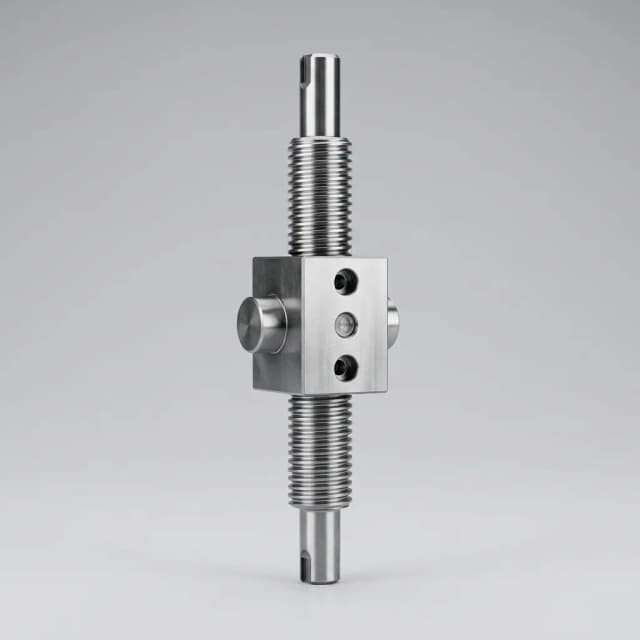
CNC Turning & Profiling
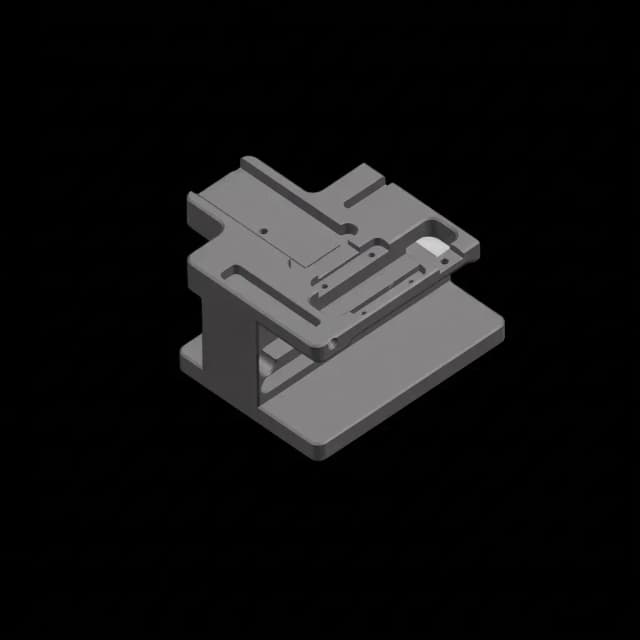
Mill-Turn Operations
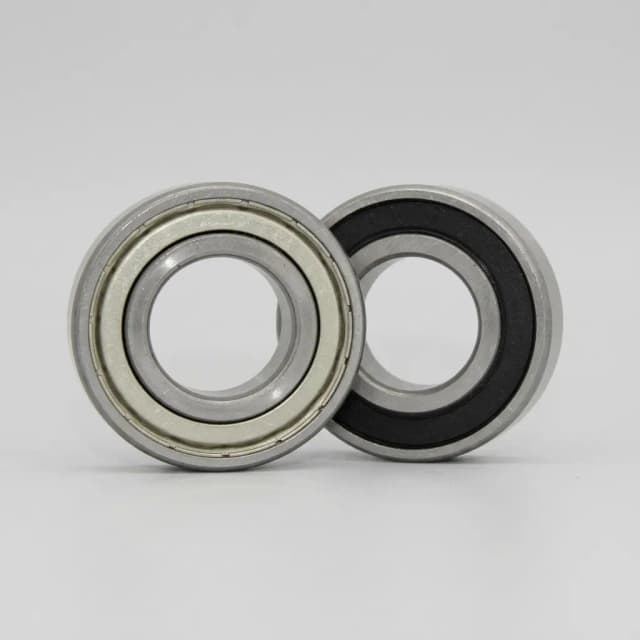
Precision Journal Grinding
Frequently Asked Questions
Why choose 1045 steel for actuator shafts instead of 4140?
1045 steel offers an excellent balance of machinability, strength, and material cost. It is generally the preferred choice for standard actuator shafts where extreme torsional loads or through-hardening are not required.
Can you hold bearing-fit tolerances on 1045 shafts?
Yes. For bearing journals, we utilize cylindrical grinding to achieve the necessary k6/j6 or similar tolerances, holding diameters to ±0.005 mm and surface finishes down to Ra 0.4 µm or better.
How do milled features like keyways affect the routing?
Keyways and flats require milling operations. We often utilize mill-turn centers to machine these features in a single setup, which ensures tight true-position tolerances relative to the main shaft axis.
Do you offer induction hardening for shaft journals?
Yes. Specific bearing or seal journals on a 1045 shaft can be induction hardened to improve wear resistance, but the HRC target and effective case depth must be confirmed in the heat-treat quote and verified after processing.
When is 1045 NOT recommended for a shaft?
If the shaft experiences severe shock loads, high-cycle reversing torsional fatigue, or requires deep hardenability, 4140 or a specialized alloy is safer. 1045 is best for moderate, steady loads.
What details are critical on a shaft RFQ drawing?
Clearly call out bearing journal tolerances, keyway dimensions and positional tolerances, total runout/straightness, and specify whether dimensions apply before or after any required surface plating.
How do you handle long, slender shafts?
For shafts with Length-to-Diameter (L/D) ratios above 8:1, we plan for tailstock support. Above 12:1, steady rests are required during turning and grinding to prevent deflection and chatter.
Are splines possible on 1045 shafts?
Yes, we can hob or mill splines on 1045 shafts. However, this adds specialized routing steps and lead time, and requires a clear callout of the spline standard (e.g., ANSI B92.1 or DIN 5480).