Check whether a 1045 steel actuator rod is a clean CNC turning job, a grinding job, or a drawing-review risk before you release the RFQ.
Tool output explains L/D ratio, routing operations, risk, and next action.
Report layer separates material facts, process capability, and quote-dependent assumptions.
Decision Summary for 1045 Rods
Last reviewed June 21, 2026. Use these conclusions to decide whether 1045 is a reasonable RFQ starting point or whether the drawing needs material review first.
Hybrid tool + sourcing guide
Use 1045 when the rod is medium-duty and cost-sensitive.
1045 is a practical default for many hydraulic and pneumatic rods, but the choice should be confirmed against pressure, cycle count, shock load, and environment.
Evidence basis: Material standard + application assumptions
Grinding is the decision point for seal life.
Turning can rough the profile, but Ra 0.4 µm or tighter seal lands need a grinding or polishing route with inspection records.
Evidence basis: Internal process capability + drawing tolerance
L/D ratio drives fixturing risk more than material grade.
Long slender rods need tailstock, steady-rest, or custom support planning before the quote can be treated as firm.
Hardness and plating must be quoted as a sequence.
Induction hardening, straightening, grinding, and plating thickness change the final size stack; dimensions should state before/after coating intent.
Evidence basis: Process sequence + supplier certificates
Why 1045 Steel for Actuator Rods?
These are decision inputs, not universal guarantees. Final acceptance depends on the supplied material condition, drawing tolerances, MTR, and inspection method. For material properties and deflection analysis, refer to our 1045 Precision Shaft Guide.
65-70% Machinability Planning Range
Supplier machining tables often list annealed or normalized 1045 around 65-70% relative to the B1112 benchmark. Treat this as a planning estimate; actual tool life, finish, and burr behavior depend on supplied hardness, bar condition, coolant, insert choice, and L/D ratio.
Targeted Induction Hardening
The chemical composition (0.43%-0.50% Carbon, 0.60%-0.90% Manganese) makes 1045 a candidate for localized induction hardening when the application needs a harder wear surface. The MTR, process specification, and hardness readings should confirm the delivered heat and case target before production release.
ASTM A29 / A108 Reference Basis
ASTM A108 and ASTM A29/A29M are useful reference standards for steel bar scope and general bar requirements. They do not by themselves prove a finished actuator rod is acceptable; the MTR, heat condition, drawing, and inspection report must close that loop.
What must be confirmed before this becomes a production route
2D drawing with revision level and dimensions before/after plating
3D model if shoulders, flats, cross holes, or end features are complex
Material condition: hot rolled, cold drawn, normalized, or customer-specified
Critical tolerance stack: diameter, straightness, runout, thread, seal land
Surface finish and inspection method for each sliding or sealing zone
Hardness target, case depth, plating type, and coating thickness if required
Prototype quantity, annual volume, packaging, and required certificates
Capabilities & Tolerances for 1045 Rods
Parameter
Standard Capability
High Precision
Diameter Tolerance
±0.02 mm
±0.005 mm (Ground)
Surface Finish (Ra)
1.6 µm
0.4 µm / 0.2 µm
Straightness / Runout
0.05 mm / 100mm
0.02 mm / 100mm
Surface Hardness
As Rolled (~20 HRc)
Induction (50-55 HRc)
Yield Strength
~310 MPa (Hot Rolled)
Up to 690 MPa (Cold Drawn)
Tensile Strength
~565 MPa
~700+ MPa
Risks & Mitigations
Deflection on long rods: We utilize CNC lathes with tailstock or steady-rest planning for L/D > 10, then verify straightness and runout from the drawing.
Distortion during heat treatment: Induction hardening is normally sequenced before straightening and final grinding so the last controlled operation can correct size and straightness risk.
Seal wear: Tight Ra requirements are verified with surface roughness readings when specified, not accepted by visual checks alone.
Fatigue life limits: 1045 has lower fatigue resistance than high-alloy steels. For high-cycle or high-pressure (>3000 psi) heavy-duty applications, stepping up to 4140 or micro-alloyed steel is recommended.
Process Route Used by the Calculator
The tool does not replace DFM review. It flags the same routing questions a manufacturing engineer checks before committing to cycle time, fixture plan, or inspection scope.
Step 1
Review drawing, datum scheme, seal lands, thread class, and coating stack.
Step 2
Select 1045 bar condition and confirm MTR requirements before cutting.
Step 3
Rough turn profile with allowance for hardening, straightening, and grinding.
Step 4
Induction harden or heat treat only when the application needs it.
Step 5
Finish grind critical diameter and measure Ra, runout, straightness, and hardness.
Decision Matrix: 1045 vs 4140 Steel
Choosing the right material affects performance, quoting risk, and inspection scope. Cost numbers are RFQ heuristics, not live commodity prices.
Often lower; confirm condition and tooling assumptions
Source basis: ASTM A108 cold-finished bar scope, ASTM A29/A29M general steel bar requirements, supplier machining tables, and Actuator Machining process capability. Public standards define the material family; production acceptance still depends on the customer drawing and MTR.
Evidence, Limits, and Source Traceability
Time-sensitive values are marked with the June 21, 2026 review date. Where public evidence is not enough, the page states what must be confirmed during RFQ instead of implying certainty.
Claim
Evidence basis
Limit / verification
1045 material standard basis
ASTM A108 covers cold-finished carbon and alloy steel bars for machining or as-finished shafting; ASTM A29/A29M covers general requirements for steel bars.
The specific chemistry, heat, and mechanical properties must be verified by the mill test report for the supplied bar.
Machinability range
Supplier machining tables commonly place annealed/normalized 1045 around 65-70% versus the B1112 benchmark.
Actual feeds, tool life, and finish depend on bar condition, hardness, inserts, coolant, and length-to-diameter ratio.
1045 versus 4140 cost tradeoff
1045 is a medium-carbon steel; 4140 adds chromium-molybdenum alloying and is usually selected for toughness and hardenability.
The +30% to +50% material premium is a quoting heuristic, not a commodity index. Confirm with current supplier quotes.
Precision tolerance capability
Listed tolerance and Ra values are Actuator Machining process targets for qualified rod features after grinding.
They are not blanket guarantees. Feature length, datum scheme, coating, and inspection method control final acceptance.
Quote must define whether final size is before or after plating.
Long slender actuator rod
D12 x L400 mm, tight runout, threaded ends
Supported turning + steady rest + final straightness check
Fixturing and inspection plan matter more than base material cost.
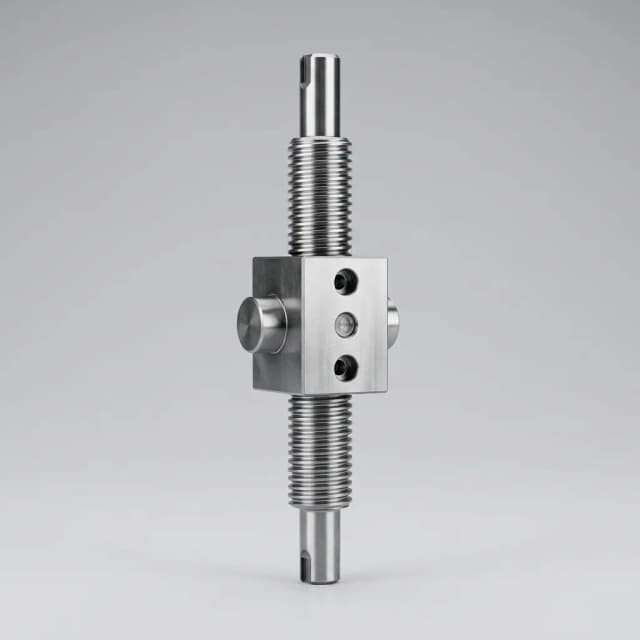
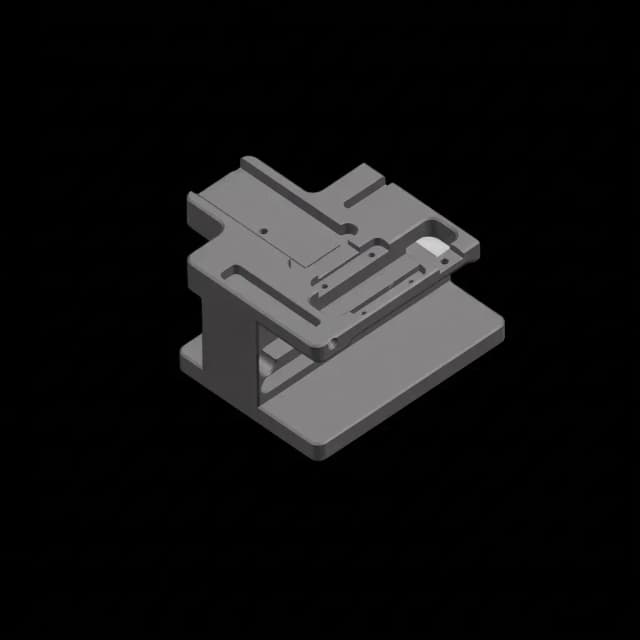
Representative shaft and rod machining visuals. Final material, coating, and inspection status are verified from the RFQ package, not from imagery.
Representative Turned Rod Profile
Representative Grinding / Inspection Setup
Representative Finished Rod Features
Frequently Asked Questions
Why choose 1045 steel for actuator rods instead of 4140?
1045 steel can offer a useful balance of machinability, strength, and material cost compared with 4140. It is often considered for standard-duty actuator rods when the drawing, load case, and environment do not require 4140 toughness or hardenability.
Can you achieve tight tolerances and fine surface finishes on 1045?
Yes, when the drawing leaves enough grind stock and defines inspection datums. We typically use CNC turning followed by cylindrical or centerless grinding for Ra 0.4 µm seal lands and diameter tolerances down to ±0.005 mm on qualified features.
What is the maximum Length-to-Diameter (L/D) ratio you can machine?
For 1045 actuator rods, L/D ratios up to 10:1 are typically straightforward with standard support. Ratios between 10:1 and 20:1 usually need steady-rest or tailstock planning to reduce deflection and chatter risk. Above 20:1, custom fixturing is assessed from the drawing.
Do you offer heat treatment and surface plating?
Yes. 1045 actuator rods may be induction hardened on defined wear zones, then straightened and ground as needed. Chrome plating, zinc plating, or black oxide finishing can be coordinated through finishing partners when the drawing defines coating thickness and final-size intent.
When is 1045 not the right rod material?
Do not default to 1045 for high-cycle fatigue, severe shock loading, corrosive washdown, or high-pressure applications without engineering review. 4140, stainless, chrome-plated alloy steel, or application-specific coatings may be safer.
What drawing details reduce quoting uncertainty?
Call out rod diameter tolerance, seal-land length, thread class, straightness/runout datum, surface finish, hardness depth, plating thickness, inspection method, and whether dimensions apply before or after plating.
Can you quote without a 3D model?
A 2D drawing is enough for an initial review if it includes all dimensions and tolerances. A 3D model helps with tool access, thread reliefs, shoulders, and end features, especially when rods include milled flats or cross holes.
How should induction hardening be sequenced?
For precision rods, rough turn first, induction harden the wear zone, straighten if needed, then finish grind. Final grinding after heat treatment is the control step for diameter, straightness, and surface finish.
What inspection records should be requested?
For production rods, request material certificates, dimensional report for critical features, surface roughness readings, hardness readings when specified, coating thickness checks, and first-article inspection for new revisions.