LogoActuator Machining
Start inquiry
LogoActuator Machining
WhatsApp
LogoActuator Machining

China-based actuator component machining supplier supporting OEM customization, inspection planning, and global delivery.

Inquiry Email

[email protected]

Email app

Include drawings, material, finish, tolerances, quantity, and delivery location.

Instant Chat

+86 188 5797 1991

Chat on WhatsApp

Direct response from our engineering team.

Products
  • Actuator Housings
  • Precision Shafts & Rods
  • Custom CNC Assemblies
Solutions
  • Robotics Components
  • Automation Equipment
  • Valve & Fluid Control
  • Aerospace & Defense
OEM Capabilities
  • Drawing Review & DFM
  • Prototype to Batch
Resources
  • Blog
  • CNC Capabilities
  • Materials & Finishes
  • Quality & Inspection
  • About
  • Contact / RFQ
  • Privacy Policy
  • Cookie Policy
  • Terms of Service
© 2026 Actuator Machining. All Rights Reserved.|Backed by Linkup Ai Co., Ltd. Manufacturing delivered by the Advanced Manufacturing Division of Linkup Precision.|Legal entity: Linkup Ai Co., Ltd.
Hybrid calculator + manufacturing report

Actuator Adapter Bracket Calculator & Machining Guide

Screen bracket bending stress, understand alignment and material tradeoffs, then prepare the RFQ evidence needed for a custom CNC-machined actuator adapter bracket.

Published July 2, 2026Updated July 2, 2026Simplified bending screenEvidence-linked material assumptions
Use the calculatorSend RFQ Files
Adapter Bracket Sizing & Stress Calculator
Estimate bending stress and factor of safety for a simplified actuator mounting bracket.

Step 1: Actuator application

Step 2: Material selection

Typical T6 planning property; verify against mill certificate.

Step 3: Dimensions and load

Range: 100-10000 N
Range: 2-30 mm
Range: 20-150 mm

Method: stress = (force x lever arm) / section modulus, where section modulus = width x thickness^2 / 6. The model is a conservative first-pass screen, not a substitute for final engineering sign-off.

Factor of Safety
3.07x
Screening pass
Bracket Bending Stress SchematicF = 1,500Nt = 10mm
Max bending stress90.0 MPa
Material yield screen276 MPa
Load conditionStatic screen
Material fitLightweight automation, robotics, and low-inertia axes.

Interpretation: The selected section clears a preliminary yield-strength screen for the simplified cantilever case.

Next action: Send the CAD model with load direction, actuator datasheet, material preference, surface finish, and inspection requirements for RFQ review.

Boundary: This is not a certified design value; final acceptance needs the drawing, fasteners, fatigue/shock assumptions, and material certificate.

Request Bracket Machining Quote

Key conclusions

What the calculator result should change in your design

The bracket is an alignment part before it is a strength part.

Evidence: A bracket that passes yield stress can still shorten actuator life if it introduces side load, angular error, or a twisted mounting face.

Action: Call out flatness, perpendicularity, and actuator centerline relationship on the drawing.
A factor of safety below 2.5x is a review trigger, not a release.

Evidence: The calculator screens simple bending only; fatigue, fasteners, welds, shock, and real lever arms can reduce available margin.

Action: Use the result to decide whether to thicken the plate, add ribs, or request FEA before production.

Material choice changes machining cost and inspection risk.

Evidence: 6061-T6 is fast and light; stainless resists washdown; 4140 can handle shock but needs heat-treat and distortion control.

Action: Send material preference, environment, expected load, and finish requirements with the RFQ.

Custom adapters are strongest when bolt patterns are consolidated.

Evidence: Retrofit plates often bridge actuator, frame, and payload interfaces; stacked adapters add height and moment arm.

Action: Combine actuator and machine-side hole patterns into one CNC-machined bracket where envelope allows.

Method and limits

The tool screens one bending case, then the report covers what it cannot prove

The calculator treats the bracket as a rectangular cantilever: bending stress equals force times lever arm divided by section modulus. That is useful for early sizing, but it does not replace actuator manufacturer limits, fastener checks, fatigue review, weld review, or finite element analysis.

Do not treat a green calculator result as release approval. If the actuator sees side load, shock, human-safety risk, or production-critical uptime requirements, ask for engineering review with real load spectra.

Load path and inspection focusframe datumadapter bracketactuator patternthrustbending + flatness risk zone

RFQ quick action

Convert the calculator result into manufacturable RFQ inputs

Include the load case, actuator datasheet, STEP model, 2D drawing, material preference, finish, and inspection evidence target so the bracket quote reflects the real interface.

Upload CAD & Get QuoteReview RFQ checklist

Evidence and assumptions

Material values are planning inputs, not substitute certs

Values below were checked on July 2, 2026. Use them for early sourcing comparison only; final acceptance needs alloy, condition, thickness, heat treatment, finish, and supplier documentation.

MaterialYield screenBest fitWatch outEvidence
6061-T6 aluminum276 MPa typicalLightweight automation, robotics, moderate thrustThread pull-out, denting, corrosion without finishMatWeb typical 6061-T6 reference; verify mill cert
A36 carbon steel250 MPa minimum classLow-cost structural brackets and weldmentsCorrosion protection and higher massASTM A36/A36M purchasing specification
304 stainless steel215 MPa typical annealedWashdown, food equipment, corrosion exposureWork hardening, tool wear, higher cycle timeAZoM 304 stainless planning reference
4140 alloy steel~655 MPa heat-treated planning valueShock-loaded brackets and compact high-load designsHeat-treat distortion and cert-dependent propertiesMatWeb 4140 reference; final value depends on condition

Visual reference

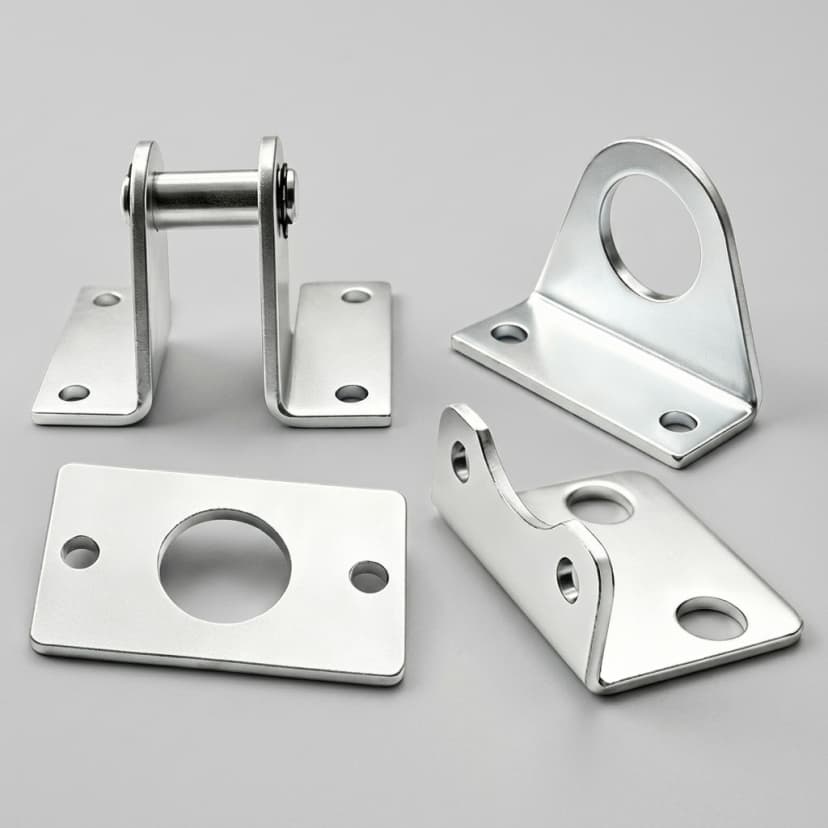
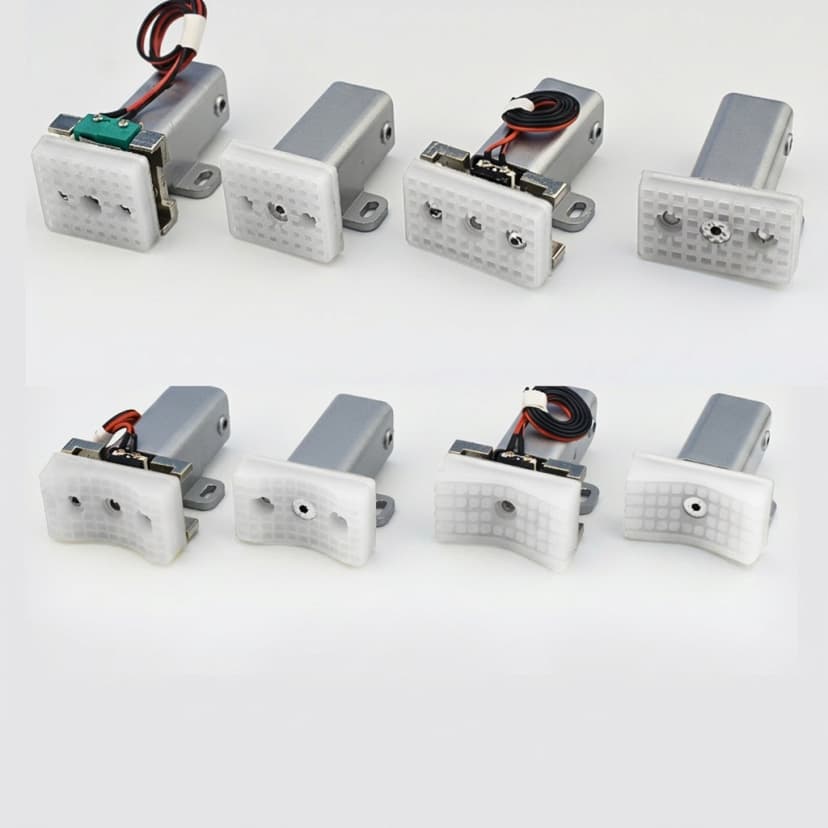
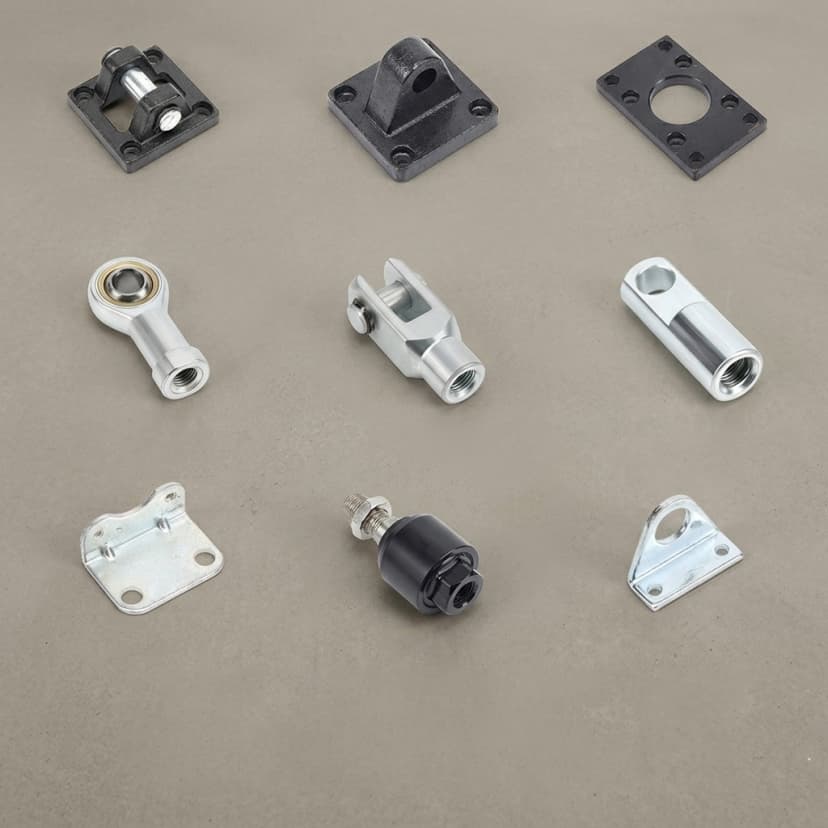
Sample bracket geometries that drive machining choices

Hole pattern density, standoff height, finish exposure, and access for cutters determine whether the adapter can stay as a simple plate or needs ribs, pockets, secondary operations, or tighter inspection.

Custom actuator adapter bracket with precision hole pattern
Heavy-duty actuator mount bracket for industrial equipment
Actuator clevis bracket machined to customer drawing

Manufacturing route

CNC is usually the right first route for adapter brackets

MethodFlatness controlVolume fitTradeoff
CNC milled adapter bracketHigh; 0.025-0.05 mm can be specified when justified1-500 pieces, bridge production, retrofit programsHigher unit price, lowest tooling risk, best pattern control
Laser cut plus machined facesMedium after stress relief and secondary machiningFlat plates with simple featuresLower cost, but edge and flatness controls need review
Die cast bracketMedium; depends on tooling and secondary machiningHigh volume after design freezeTooling cost and porosity risk before volume pays back
Stamped bracketLow to medium for actuator alignment facesThin, low-load bracketsFast and cheap at scale, limited thickness and rigidity

Drawing controls

Minimum callouts for a useful bracket RFQ

  • Primary mounting face flatness and datum scheme.
  • Actuator bolt pattern position relative to machine-side pattern.
  • Perpendicularity or parallelism for the actuator load axis.
  • Material condition, finish thickness, and masked inspection datums.
  • Critical-to-function holes, threads, dowels, and counterbores.

Risk and mitigation

A bracket failure is often a systems-interface failure

Side-load and angular misalignment

Impact: Seal wear, guide wear, screw binding, reduced actuator force

Mitigation: Control centerline offset, use dowels or pilots, add external guide rails when the actuator cannot carry radial load.

Fastener bearing or thread pull-out

Impact: Bracket passes bending screen but bolts loosen or holes elongate

Mitigation: Check bolt shear, bearing stress, thread engagement, inserts, and washer seats separately from bracket bending.

Machining distortion

Impact: Flatness drifts after heavy material removal or heat treatment

Mitigation: Use stress-relieved plate, rough/finish sequencing, balanced stock removal, and post-finish inspection.

Surface finish mismatch

Impact: Corrosion, galling, or paint/anodize buildup changes fit

Mitigation: Specify coating thickness, masked datums, post-finish thread gauges, and final critical dimensions after finish.

Scenario guidance

Use the same bracket keyword differently by application

Robotic end-effector actuator adapter

Assumptions: Low mass matters, moderate thrust, compact envelope, frequent cycles.

Likely decision: 6061-T6 with dowel features and hardcoat/anodize where wear or corrosion matters.

Next step: Screen bending in the calculator, then confirm fatigue and fastener preload.

Pneumatic press or clamp bracket

Assumptions: Impact factor, vibration, and bracket stiffness dominate the design.

Likely decision: Steel or ribbed aluminum bracket with generous thickness and short lever arm.

Next step: Review shock load, add gussets, and request FEA if safety factor is marginal.

Washdown packaging equipment retrofit

Assumptions: Existing frame holes do not match the replacement actuator, and cleaning chemicals are present.

Likely decision: 304/316 stainless adapter or coated aluminum with masked datum surfaces.

Next step: Provide chemical exposure, cleaning cycle, and required surface finish in the RFQ.

RFQ handoff

Send enough information to price the real bracket, not a guess

RFQ inputWhy it mattersMinimum useful detail
Actuator datasheetDefines allowable mounting loads, bolt pattern, stroke envelope, and any manufacturer limits.Manufacturer, model, drawing, load direction, duty cycle.
CAD and 2D drawing3D geometry controls manufacturability; 2D drawing controls inspection and acceptance.STEP + PDF with datums, tolerances, material, finish, and quantity.
Load casePeak thrust alone is not enough if shock, fatigue, or off-center force exists.Static/dynamic load, lever arm, cycle rate, environment, safety target.
Inspection evidencePrevents ambiguity over flatness, hole position, and perpendicularity.CMM report, first article, thread gauges, material cert, finish cert.

Source trail

References used for this planning guide

Last checked July 2, 2026. Standards and material pages can be revised; use current supplier documents for release decisions.

MatWeb 6061-T6 aluminum reference

Typical 6061-T6 yield-strength planning reference.

ASTM A36/A36M structural steel specification

Purchasing and minimum-yield context for common carbon steel brackets.

AZoM 304 stainless steel material reference

Secondary property reference for 304 stainless corrosion and strength screening.

MatWeb AISI 4140 steel reference

Typical 4140 alloy-steel property context; heat treatment changes values materially.

Thomson linear actuator sizing guidance

Actuator sizing context and the need to evaluate applied load cases rather than bracket geometry alone.

ASME Y14.5 GD&T standard overview

Authoritative standard family for geometric tolerancing callouts such as flatness and perpendicularity.

FAQ

Actuator adapter bracket questions buyers ask before RFQ

Design Decisions

Materials & Finishes

RFQ & Manufacturing

Related machining guides

Check adjacent actuator interfaces before freezing the bracket

6061 aluminum actuator housing

Compare lightweight aluminum actuator interfaces when bracket mass and corrosion control matter.

316 stainless steel actuator housing

Review washdown and corrosion trade-offs before choosing stainless adapter bracket hardware.

7075 aluminum actuator housing

Use high-strength aluminum context when compact brackets need stiffness without steel weight.

Actuator rod machining

Check rod-side loads and machining requirements before finalizing the bracket load path.

Actuator assembly guidelines

Review critical alignment risks and understand when precision dowels are needed during assembly.

Ready to manufacture a custom actuator adapter bracket?

Send the CAD model, actuator datasheet, load direction, material and finish target, quantity, and inspection needs. We can review manufacturability and quote CNC prototypes or production runs.

Upload CAD & Get QuoteView CNC Capabilities