
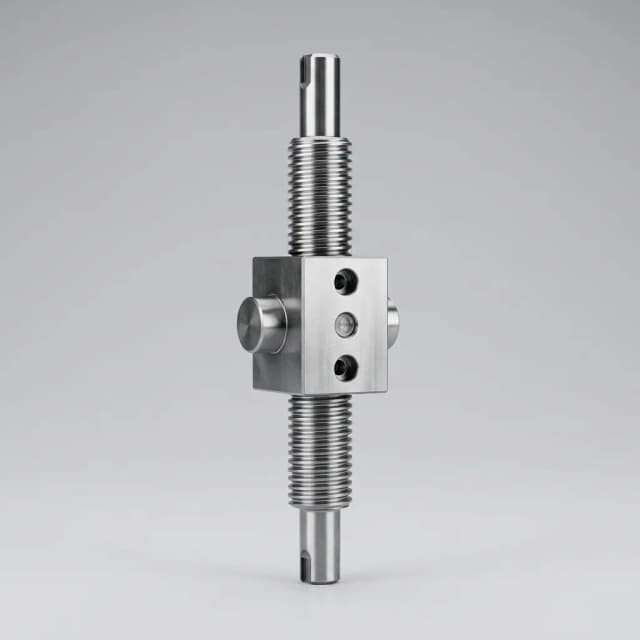
Ground journal control
Calculate deflection limits for 4140 Turned, Ground, and Polished (TGP) or heat-treated chromoly shafts, then compare when 4140 is worth the premium over 1045 or stainless alternatives.
4140 earns its place when torsional shock, fatigue, impact load, or through-hardening risk makes 1045 marginal. Treat alloy premium, heat treatment, grinding allowance, and inspection scope as quote-specific variables rather than fixed catalog percentages.
Annealed 4140, pre-hardened 4140 HT, TGP stock, and induction hardened journals do not quote the same way. Higher hardness usually increases tool wear, grinding dependency, and inspection burden even when the final shaft performs better.
4140 is not a deflection shortcut. Like other steels, it is near 205 GPa in elastic modulus; diameter, span, support condition, and load drive stiffness.
The route changes by purchased condition. Use this as a quote checklist, not as a universal process plan.
The values below are screening references for 4140 precision shaft conversations. Mechanical properties depend on purchased condition, section size, heat treatment, and certification; use the mill test report and drawing notes for final acceptance.
| Property | Typical Screening Value | Use / Limit | Evidence Needed |
|---|---|---|---|
| Elastic Modulus | About 205 GPa for 4140 and most carbon/alloy steels | Use for deflection screening only. Switching from 1045 to 4140 will not materially reduce elastic bending. | Engineering handbook value; verify if a customer specification requires a different modulus. |
| Chemistry Identity | Cr-Mo alloy steel; see chemistry table below | Use to confirm the material family and MTR review scope, not final mechanical performance. | ASTM A29/A108 context plus order-specific mill test report. |
| Strength Condition | Annealed, HT/Q&T, TGP, and induction-hardened routes vary | Do not accept a generic 4140 callout as proof of yield, tensile, hardness, or fatigue capability. | MTR, heat-treatment certificate, hardness map, and drawing notes required. |
| Fatigue Release | N/A as a universal number | Fatigue depends on load spectrum, diameter transitions, keyways, surface finish, residual stress, and corrosion. | Drawing-specific fatigue review required; public bar standards are not a fatigue release. |
| Bearing Journal Finish | Ra 0.2 - 0.4 micrometer is a common ground-journal target | Surface texture must be specified together with diameter tolerance, roundness, cylindricity, shoulders, and inspection method. | SKF bearing-seat interface guidance plus drawing requirements. |
| Hardness / Case Depth | N/A until heat-treatment route is quoted | Induction-hardened journals need target hardness, effective case depth, post-heat-treat grind allowance, and verification method. | Heat-treatment supplier quote and post-process inspection record required. |
| Carbon (C) | Manganese (Mn) | Chromium (Cr) | Molybdenum (Mo) | Phosphorus (P) Max | Sulfur (S) Max |
|---|---|---|---|---|---|
| 0.38 - 0.43% | 0.75 - 1.00% | 0.80 - 1.10% | 0.15 - 0.25% | 0.040% | 0.040% |
Data Sources & Verification: Public standards and supplier guidance define bar-product, chemistry, and bearing-interface context. They do not prove final yield strength, tensile strength, hardness, or fatigue acceptance for a specific shaft. Final acceptance still depends on the MTR, drawing, heat-treatment certificate, and inspection plan. Data last reviewed: June 25, 2026.
Ground journal control
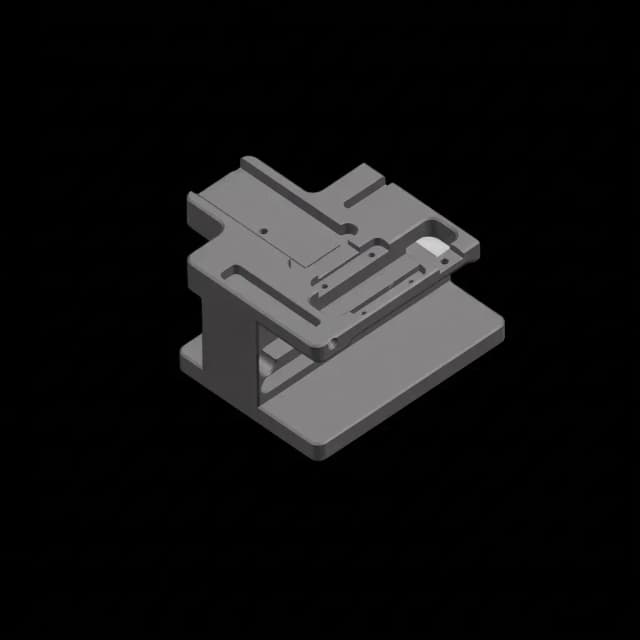
Stepped shaft machining
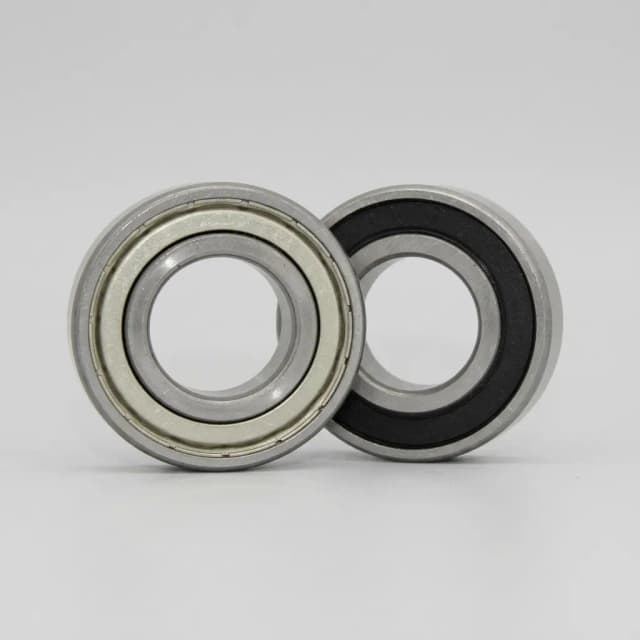
Keyway and thread features
Standards: ASTM A108/A29 references establish bar-product and chemistry context, not your final shaft acceptance limits.
Bearing interfaces: SKF guidance is used for the principle that surface texture, dimensional tolerance, and geometrical tolerance must be controlled together.
Unknowns: Live material pricing, supplier stock condition, heat treat response, and load spectrum are not knowable from a browser calculator. They remain RFQ review items.
4140 Chromoly Alloy Steel has poor corrosion resistance. If used in exposed environments, it must be hard-chrome plated, black oxided, or regularly oiled. For washdown environments, upgrade to 304/316 Stainless.
Compare materials by the failure mode you are trying to prevent. For precision shafts, the usual tradeoff is not simply grade strength; it is strength, corrosion, hardness route, tolerance control, and inspection cost together.
| Decision Axis | 4140 | 1045 | 304 / 316 | RFQ Evidence |
|---|---|---|---|---|
| Elastic stiffness | Near 205 GPa | Near 205 GPa | Lower, about 190-193 GPa | Deflection calculation, support assumption |
| Strength reserve | Strong when Q&T / HT condition is specified | Good for moderate load, less hardenability | Corrosion-driven choice unless high-strength tempers apply | MTR, heat-treatment certificate, hardness map |
| Corrosion | Needs plating, oil, black oxide, or coating | Also needs corrosion plan | Best option for washdown or chloride exposure | Environment, coating stack, salt/chloride exposure |
| Machining and grinding | More sensitive to hardness and grind allowance | Usually simpler when strength reserve is adequate | Work-hardening and corrosion specs can add cost | Purchased condition, finish, tolerance, annual volume |
Use the calculator as a screening tool. The table below explains when the page output is reliable enough for RFQ preparation and when a drawing review should override the quick estimate.
| Decision | Use 4140 When | Escalate or Change Material When | Next Action |
|---|---|---|---|
| Stiffness | Deflection is acceptable after checking span, support, and diameter. | Deflection fails; changing from 1045 to 4140 alone will not solve elastic bending. | Increase diameter, shorten span, or add support. |
| Wear | Only journal surfaces need wear resistance and can be induction hardened then ground. | The whole shaft needs through-hardness or shock resistance. | Quote hardening targets, case depth, and grind allowance. |
| Environment | The shaft operates indoors with oil, plating, or planned corrosion protection. | Washdown, salt, condensation, or exposed outdoor service is expected. | Compare coating stack-up against 304/316 stainless. |
Premise: Small deflection, tight bearing fit, dry indoor motion.
Decision: 4140 TGP can work if diameter tolerance, roundness, Ra, and straightness are specified together.
Premise: Reversing torque and impact loads are the known failure mode.
Decision: 4140 HT or Q&T is a stronger candidate than 1045, but fatigue review needs keyway/root geometry and load spectrum.
Premise: Condensation, cleaning fluid, or chloride exposure is expected.
Decision: Do not choose bare 4140 just for strength; compare plated 4140 against 304/316 stainless and seal design.
Send diameter stack, bearing fits, runout, heat treatment, coating, and volume so engineering can confirm the route.
Yes, 4140 has enough carbon for localized induction hardening on wear journals. Treat HRC and effective case depth as quote-controlled targets that must be verified after heat treatment.
4140 can be welded, but the medium carbon content makes it crack-sensitive without preheat, controlled filler selection, and post-weld stress relief. It is not as forgiving as low-carbon 1018.
TGP means turned, ground, and polished. For shafting, it signals a route intended to improve diameter control, surface finish, and bearing-interface consistency.
Choose 4140 when torsional shock, high-cycle reversing fatigue, or through-hardening requirements drive the risk. Do not choose it only to reduce elastic deflection, because the elastic modulus of both steels is identical (205 GPa).
Include material condition, diameter and length, bearing-fit tolerances, runout, straightness, finish requirements, heat treatment zones, coating, annual volume, and inspection method.
Only with a corrosion plan. Bare 4140 rusts readily, so outdoor or washdown applications usually need chrome, nickel, black oxide plus oil, or a stainless alternative.
No. 4140 and plain carbon steels have nearly the same elastic modulus, so deflection changes mainly with diameter, span, support condition, and load. 4140 helps when yield strength, fatigue strength, or hardenability is the limiting risk.
Call out the purchased condition that matters: 4140 TGP for ground stock, 4140 HT or Q&T for prehardened strength, and separate induction-hardening notes for localized wear journals.
No. The calculator only screens simple elastic deflection. Bearing fits still need diameter tolerance, roundness, cylindricity, surface texture, shoulder geometry, and inspection method reviewed against the bearing supplier guidance.
Public standards and supplier pages help frame chemistry, bar-product scope, and bearing-seat requirements, but they do not replace the mill test report, heat-treatment certificate, or inspection record for a specific shaft order.
Send drawings for precision turning, centerless grinding, and milling review. Include material condition, tolerance, finish, hardness, and annual volume so engineering can validate the route before quoting.
Inquiry Email
Include drawings, material, finish, tolerances, quantity, and delivery location.