
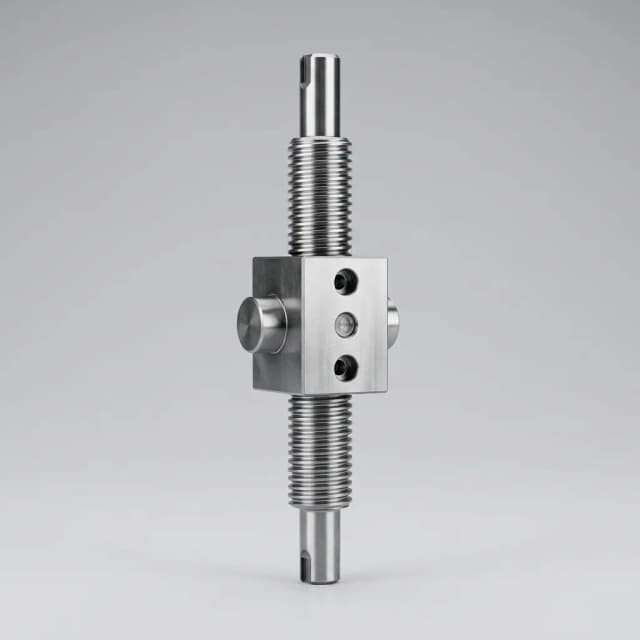
Precision grinding
Calculate deflection limits for 316 Stainless precision shafts, evaluate marine/chemical resistance, and review machining trade-offs before quoting.
316 earns its cost when shafts see salt spray, coastal air, chloride cleaners, or chemical washdown. For dry indoor duty, 304 or plated 1045 often gives the same service result for less cost.
Evidence: ASTM A276/A479 chemistry limits include 2.0-3.0% Mo for 316, and PREN methods weight Mo heavily for pitting resistance.
Annealed 316 is corrosion-driven, not hardness-driven. Sliding journals, threads, and actuator pins need lubrication, dissimilar mating materials, coating, or a different alloy.
Evidence: A276 mechanical ranges list modest annealed yield strength and hardness compared with heat-treatable shaft steels.
A correct alloy can still rust or pit if machining leaves embedded iron, burrs, rough bearing seats, or unpassivated surfaces after grinding and milling.
Evidence: SKF bearing-seat guidance treats finish together with dimensional and geometrical tolerances; ASTM A967 passivation is commonly specified after machining.
| Property | Typical Value | Notes |
|---|---|---|
| Tensile Strength | 515 - 620 MPa | Annealed condition |
| Yield Strength | 205 MPa (Cond A) >515 MPa (Cond B) | Cond A: Annealed. Cond B: Cold Drawn. |
| Hardness (Typical) | Max 217 HB | Cannot be thermally hardened |
| PREN (Pitting Resistance) | 23 - 28 | Calculated index for chloride resistance |
| Standard Tolerance | ISO h6 / h7 | Centerless ground for bearing interfaces |
| Surface Finish | Ra 0.2 - 0.8 μm | Polishing improves corrosion resistance |
| Chromium (Cr) | Nickel (Ni) | Molybdenum (Mo) | Carbon (C) Max | Iron (Fe) |
|---|---|---|---|---|
| 16.0 - 18.0% | 10.0 - 14.0% | 2.0 - 3.0% | 0.08% | Balance |
Data Sources & Verification: Mechanical properties and chemical compositions are based on ASTM A276 and ASTM A479 bar standards, PREN ranking uses the BSSA formula, and bearing finish notes are cross-checked against SKF bearing-seat guidance. Values depend heavily on whether the bar is annealed, cold drawn, passivated, or polished. Data last reviewed: June 28, 2026.
The calculator is a static simply supported beam screen. It is useful for comparing diameter, span, load, and modulus, but it does not approve torsion, fatigue, keyway stress, shock, seal drag, thermal growth, or corrosion-fatigue.
The material report uses public standard descriptions and practical RFQ controls. Exact mill properties must come from the supplier's material test report for the heat and condition actually purchased.
Where public evidence is incomplete, this page marks the remaining decision as drawing review rather than presenting a browser estimate as final engineering approval.
| Claim | Evidence | Source | Limit |
|---|---|---|---|
| 316 improves pitting resistance versus 304 | 316 chemistry includes Mo; PREN = %Cr + 3.3x%Mo + 16x%N. | ASTM A276/A479 chemistry ranges; BSSA PREN method | PREN ranks alloy potential. It does not replace testing for temperature, pH, chloride level, crevice geometry, or cleaning chemistry. |
| 316 is weaker than heat-treated carbon/alloy shaft steels | Annealed 316 has a low yield screen versus quenched/tempered 1045 or 4140 options. | ASTM A276/A479 mechanical property tables | Cold drawn Condition B can lift yield strength, but surface hardness and galling behavior still need separate review. |
| Bearing surfaces need both geometry and finish control | Shaft seats are controlled by dimensional, geometrical, and surface texture requirements. | SKF bearing-seat surface texture guidance | Final Ra, roundness, cylindricity, and runout targets must match the bearing manufacturer and load case. |
| Post-machining cleaning is not optional in corrosive service | Passivation removes free iron contamination introduced during machining and handling. | ASTM A967/A967M passivation standard | Electropolishing, pickling, or application-specific cleaning may be needed for sanitary or pharmaceutical audits. |
Precision grinding
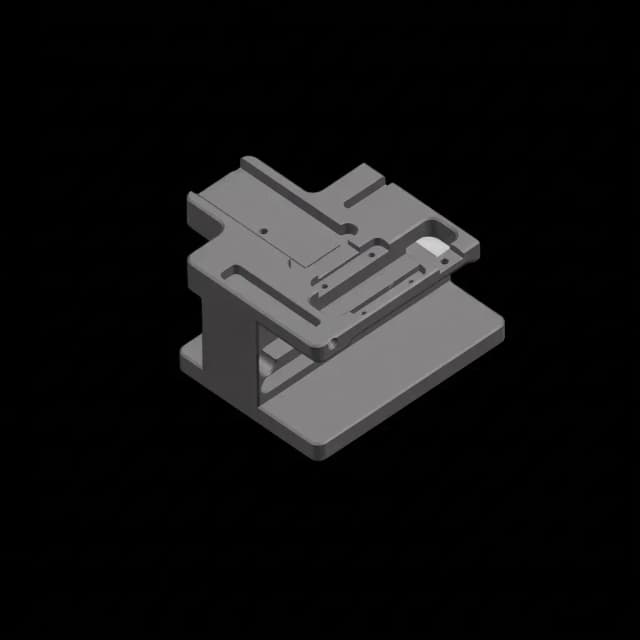
Milling features
Sanitary finishing
To achieve maximum corrosion resistance, 316 stainless shafts must have a smooth surface finish and be properly passivated to remove free iron from the machining process.
| Dimension | 316 Stainless | 304 Stainless | 1045 Steel | 4140 Steel |
|---|---|---|---|---|
| Best reason to choose | Chloride, marine, chemical, food/pharma washdown | General corrosion resistance without chlorides | Economical, stiff, grindable shafting with coatings | Higher strength, fatigue, and heat-treated wear service |
| Main weakness | Soft, galling-prone, slower machining | Lower chloride resistance than 316 | Needs coating or oiling for corrosion resistance | Higher material/process cost than 1045, still corrodes |
| Heat treatment path | Not thermally hardenable; cold work only | Not thermally hardenable; cold work only | Can be induction hardened or quenched/tempered | Commonly quenched/tempered or nitrided |
| Typical RFQ control point | Passivation, polish, galling mitigation, material certs | Finish, passivation, weldability, cleaner exposure | TGP tolerance, coating, case hardness, straightness | Heat treat cert, hardness, grinding burn, runout |
| Scenario | Assumptions | Recommendation | Watch-out |
|---|---|---|---|
| Marine linear actuator rod | Salt spray, light side load, sealed bearings, exposed shaft. | 316 shaft with polished journals and passivation is a strong default. Verify deflection and use compatible seals. | Pitting begins at scratches or unpassivated machined features. |
| Food washdown positioning shaft | Chloride cleaner, frequent cleaning, audit trail needed. | 316 or 316L with documented passivation/electropolish requirements and cleanable transitions. | Thread roots, keyways, and rough grooves trap residue and can fail hygiene review. |
| High-load sliding guide shaft | Direct sliding contact, high bearing pressure, limited lubrication. | Do not rely on bare 316. Use hard chrome/PTFE, a bushing pair, Nitronic 60, 440C, or plated 4140 depending on corrosion demand. | Galling or rapid wear can dominate before corrosion resistance matters. |
| Indoor actuator with no chloride exposure | Dry factory air, standard bearings, cost pressure. | 304, 1045 TGP with coating, or 4140 may be more economical. Use 316 only if cleaning chemicals or corrosion audit rules require it. | Over-specifying 316 increases material and machining cost without reducing the main failure mode. |
Review this screening matrix to ensure 316 Stainless is the right material for your shaft design before requesting quotes.
| Decision | Use 316 When | Escalate or Change Material When | Next Action |
|---|---|---|---|
| Environment | Operating in salt water, near coastline, or harsh chemical washdown. | Operating indoors or with plain water washdown. | Downgrade to 304 or plated 1045 to save cost and machining time. |
| Wear & Hardness | The shaft relies on bearings for wear, and the journals are not subjected to direct sliding friction. | The shaft requires high hardness (e.g., HRC 50+) or is prone to galling/cold welding in sliding contacts. | Change to a hardenable stainless (like 440C), Nitronic 60 for galling resistance, or specify hard chrome/PTFE plating. |
| Deflection | The load is light and the shaft remains stiff enough under the 190 GPa modulus limit. | The shaft bends excessively under load, failing the tolerance check. | Increase the shaft diameter. |
| Risk | Trigger | Impact | Mitigation |
|---|---|---|---|
| Galling and cold welding | Bare 316 sliding on stainless, loaded threads, dry assembly. | Seized adjusters, torn surfaces, rejected assemblies. | Use dissimilar mating materials, lubricant, rolled threads, anti-galling coating, or Nitronic 60 where galling dominates. |
| Hidden corrosion despite correct alloy | Free iron contamination, rough grooves, stagnant crevices, weld heat tint, or missing passivation. | Rust staining, pitting, sanitary audit failure. | Specify deburr, passivation per ASTM A967, optional electropolish, and inspection after cleaning. |
| Stiffness miss | Long span, small diameter, high center load, unsupported grinding. | Runout, binding, seal wear, missed positioning accuracy. | Increase diameter, shorten span, add supports, change bearing layout, or use a stiffer/larger shaft material package. |
| Wrong inspection scope | RFQ asks for material only and omits bearing fits, Ra, runout, straightness, and certificate requirements. | Low quote looks attractive but does not control the real failure mode. | Attach drawing, inspection plan, material condition, finish, passivation, and annual volume before quoting. |
Send diameter stack, bearing fits, runout, and surface finish requirements so engineering can confirm manufacturability.
316 stainless steel contains 2-3% molybdenum, which improves pitting resistance in chloride exposure such as salt water, de-icing salts, and some cleaners. Use 316 when chloride exposure is confirmed; otherwise 304 or coated carbon steel may be more economical.
No, 316 is an austenitic stainless steel and cannot be hardened by thermal heat treatment. It can only be work-hardened through cold drawing or rolling, which marginally increases yield strength but not enough for heavy wear resistance.
In its annealed state, 316 is generally non-magnetic. However, heavy cold working (like drawing or machining) can make it slightly magnetic. It should not be used if absolute non-magnetic permeability is strictly required without a post-machining anneal.
316 tends to work-harden rapidly ahead of the cutting tool and has a stringy chip formation. It requires rigid tooling, sharp inserts, positive rake angles, and abundant coolant to prevent tool wear and galling.
Yes, 316 is commonly specified for pharmaceutical and food-processing equipment because it resists many sanitizing chemicals and chloride-based cleaners better than 304. Confirm the exact cleaner, temperature, surface finish, and audit requirements.
Avoid bare 316 when the main failure mode is high sliding wear, high surface hardness, severe bending stiffness, or dry stainless-on-stainless threading. In those cases, review 440C, Nitronic 60, plated 4140, hard chrome, PTFE, or a bushing redesign.
Include material grade and condition, diameter stack, bearing fits, straightness, runout, Ra, passivation or electropolish requirements, thread/keyway details, annual volume, inspection reports, and any certification requirements.
No. Passivation helps remove free iron contamination, but it does not fix burrs, smeared material, rough crevices, heat tint, or an unsuitable surface finish. Design and machining controls still matter.
No. It is a first-pass simply supported beam screen for static center load. It excludes torsion, fatigue, keyway stress concentration, bearing stiffness, thermal growth, shock loading, and corrosion-fatigue interactions.
Precision shaft RFQs often request ground or polished bearing journals, but the exact Ra target should come from the bearing and seal system. SKF guidance treats surface texture as part of the fit, geometry, and bearing interface package.
316L is often chosen when welding or low carbon content matters, but shaft strength and machinability still need review. For non-welded precision shafts, confirm whether the buyer needs 316, 316L, or dual-certified 316/316L material.
For controlled applications, request material test reports, heat/lot traceability, passivation certificate when specified, inspection results for critical dimensions, and any surface finish or runout records required by the drawing.
Compare carbon-steel stiffness, cost, and hardening options when corrosion is not the main driver.
Review bearing-seat tolerances, grinding routes, and shaft selection trade-offs.
See how the 304/316 corrosion decision changes for housings and structural actuator parts.
Review the complimentary actuator housing guide for your 316 stainless steel shaft assembly.
Compare 304 and 316 shaft choices for washdown, machining cycle time, and chloride exposure.
Review stainless passivation, certificates, surface finish controls, and corrosion-resistant material options.
See production capabilities for custom actuator shafts, rods, journals, and ground bearing surfaces.
Send drawings for precision turning, milling, and grinding review. Include tolerance, finish, and annual volume so our team can validate the route and optimize tooling before quoting.
Inquiry Email
Include drawings, material, finish, tolerances, quantity, and delivery location.